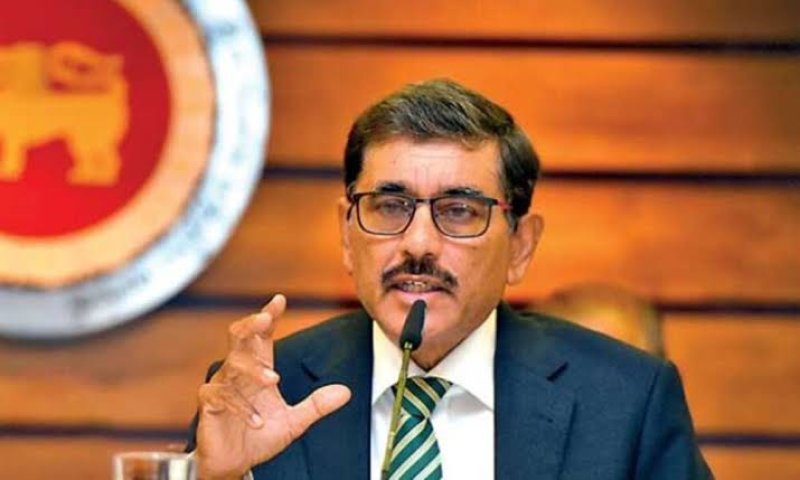
Sri Lanka cannot build foreign exchange reserves through market distortions, monetary financing or excessive foreign borrowing and must instead build adequate buffers before external shocks occur, Central Bank Governor Dr. Nandalal Weerasinghe said.
Addressing a Reserve Management Conference in Colombo, Weerasinghe said foreign reserves were more than financial assets on a central bank balance sheet, describing them as the country's first line of defence against external shocks.
“Foreign reserves are a nation’s savings that provide vital time and policy space during a crisis,” he said, adding that they help prevent disorderly economic adjustments.
Weerasinghe recalled Sri Lanka’s 2022 economic crisis, when depleted foreign exchange buffers severely restricted imports, accelerated inflation and contributed to the country’s debt default.
He said Sri Lanka's external position had improved since 2023, but rebuilding reserves was not a linear process as sudden external shocks could quickly erode accumulated buffers.
He stressed that reserve accumulation had to be achieved with discipline and could not be pursued at any cost.
“Excessive market interventions distort price signals, monetary financing fuels inflation, and commercial debt creates future repayment burdens,” Weerasinghe said.
“A sustainable reserve accumulation strategy is not merely about acquiring reserves; it is about building an economy that naturally generates and retains foreign exchange,” he added.
The Governor said reserve adequacy should also be assessed beyond the conventional measure of months of import cover, taking into account debt-servicing requirements, volatile capital flows and climate-related shocks.
He further cautioned that diversification of reserve assets should not come at the expense of liquidity, while noting that bilateral support from the Reserve Bank of India during Sri Lanka’s crisis had been vital to strengthening regional resilience.
Asian Infrastructure Investment Bank Treasurer Domenico Nardelli, who was the chief guest and delivered the keynote address, said reserve managers were facing significant price volatility even in traditionally safe assets such as US Treasury securities.
Nardelli rejected claims of an imminent collapse of the US dollar, noting that the currency still accounted for around 57% of allocated global foreign exchange reserves.
He also noted that gold had reached record price levels but cautioned that it generated no yield and was subject to significant price fluctuations.
“Liquidity carries an inherent cost of carry. Rather than viewing this financing drag as lost yield, institutions must treat it as an essential insurance premium,” Nardelli said.
Referring to historical merchant bank failures and the collapse of Silicon Valley Bank in 2023, he said maintaining adequate liquid buffers gave institutions critical time to reassure markets and manage unexpected cash outflows.