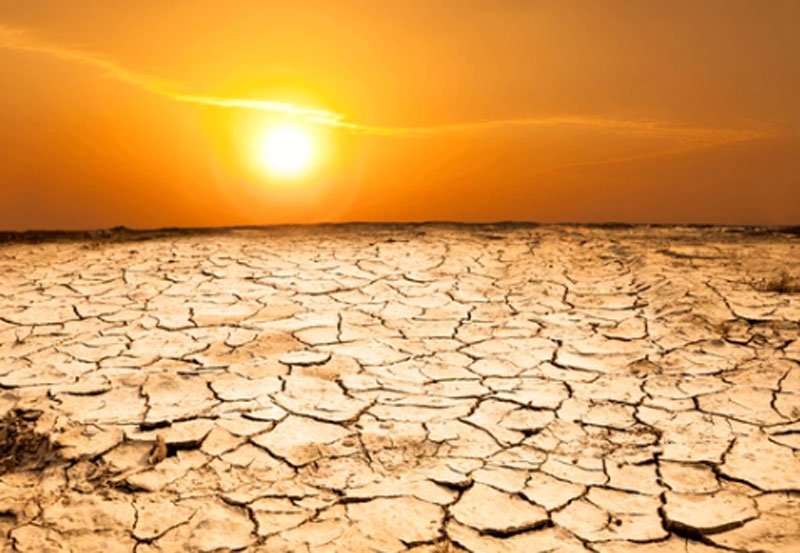
More than 68,041 people across Sri Lanka have been affected by the prevailing dry weather conditions, according to the National Disaster Relief Services Centre.
17 Grama Niladhari divisions across four districts have been affected by the prolonged dry spell.
Several areas are also facing drinking water shortages, creating difficulties for both agricultural activities and the daily lives of residents.
In Hingurakgoda, Polonnaruwa, residents of the Hataraskotuwa area are facing severe hardships after the Makula Wewa reservoir dried up.
Water levels have begun to recede in several reservoirs in the Mihintale area, including Mihintale Puna Wewa, Surukkulama Wewa, Kon Wewa and Weruppankulama Temple Wewa, due to the prevailing dry conditions.
The Department of Meteorology has also warned that the heat index will reach levels requiring attention in several districts tomorrow. These include Vavuniya, Mullaitivu, Trincomalee, Polonnaruwa, Batticaloa, Ampara and Monaragala.
The highest temperature recorded in the country today was reported from Polonnaruwa.
Deputy Minister of Housing, Construction and Water Supply Susil Ranasinghe said water is being distributed by bowsers to areas facing drinking water shortages in Batticaloa, Monaragala, Ratnapura and Ampara districts.
Meanwhile, Consultant Child and Adolescent Psychiatrist at the Ragama Medical Faculty, Professor Miyuru Chandradasa, warned that prolonged hot weather could contribute to the worsening of mental health conditions such as depression.
Against this backdrop, the Parliamentary Forum on Climate Change in Sri Lanka has stressed the need for proactive governance and preparedness mechanisms to address climate-related challenges, including the impact of El Niño and other climate change phenomena.
The discussion was attended by Opposition Leader Sajith Premadasa, Parliamentarian Professor L. M. Abeywickrama, and others.
The meeting focused on a range of issues, including climate change, El Niño, agriculture, water management, wildlife conservation, the human-elephant conflict, disaster management and environmental management.
Authorities have emphasized the need for effective preparedness and long-term water and environmental management strategies as Sri Lanka continues to face increasingly challenging dry and hot weather conditions.