
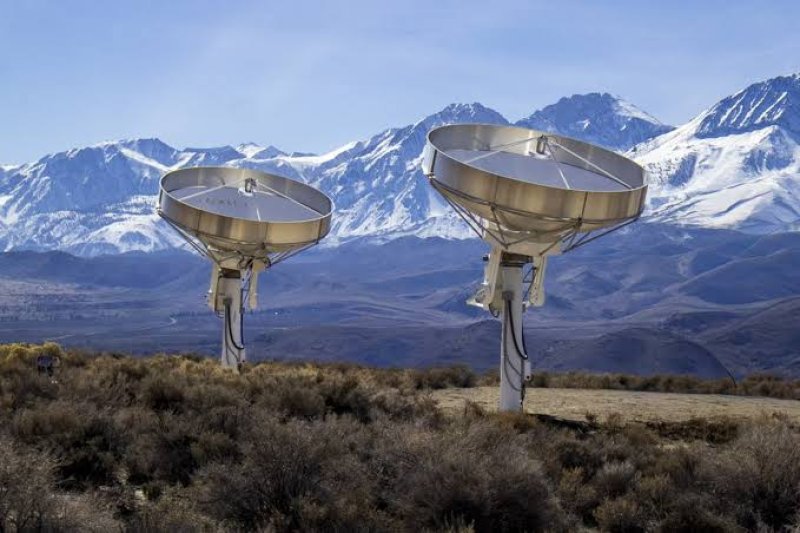











“It’s the sheer number of antennas that makes this completely unique and unlike other existing telescopes,” said Gregg Hallinan, a professor of astronomy at Caltech and a principal investigator for the Deep Synoptic Array.
Radio telescopes detect naturally occurring radio waves emitted by stars, planets, galaxies and other celestial objects. Astronomers can analyze the unique patterns of radio emissions from these sources to understand their structure, composition and other characteristics such as temperature. NBC reported.
Radio telescopes don’t snap photos in the same way as optical observatories, but the trove of resulting radio signals can be converted into data and turned into images.
Hallinan said that once built, the Deep Synoptic Array will outperform all other ground-based radio telescopes that came before it, surveying the sky 100 times faster and producing the highest-quality radio images to date.
“Every telescope that has been built in