











 State Ceremony Concluding “Ehi Passiko” Peace Walk
 State Ceremony Concluding “Ehi Passiko” Peace Walk
Based on the Buddha’s teaching, “Charatha Bhikkhave Charikam Bahujana Hitaya Bahujana Sukhaya Lokanukampaya”, the peace walk began on the 22 April near the Dambulla Rajamaha Viharaya. Led by Venerable Pannakara Thero of Vietnam and joined by twelve foreign monks, the walk covered over 210 kilometres before arriving at Independence Square this afternoon.
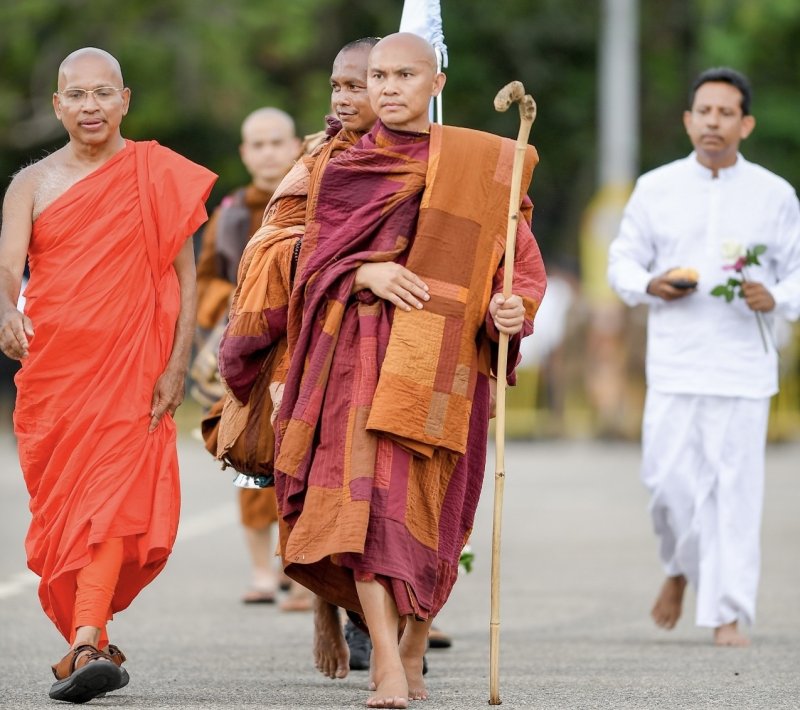 Venerable Pannakara Thero arrived at State Ceremony Concluding “Ehi Passiko” Peace Walk
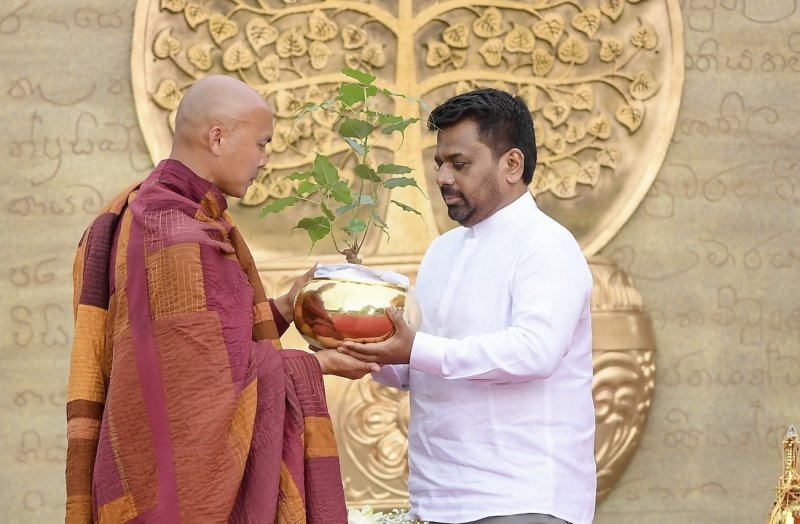
At the ceremony, the Sacred Relics and the sapling of the Sacred Jaya Sri Maha Bodhi were formally handed over by President Anura Kumara Dissanayake to Venerable Pannakara Thero.
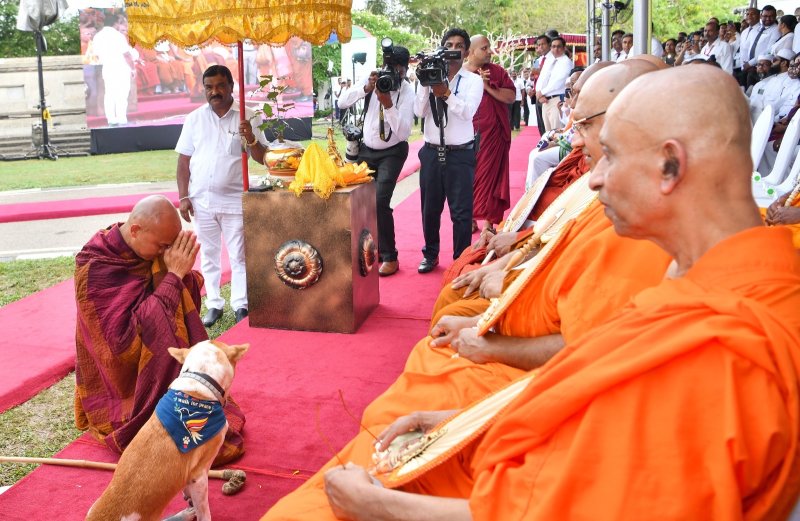 State Ceremony Concluding “Ehi Passiko” Peace Walk
In his address, the President stated that the pilgrimage undertaken by Venerable Pannakara Thero and his group had generated a renewed enthusiasm for the Dhamma within the country. It also demonstrated the deep devotion and respect that the general public holds for disciplined and learned members of the Sangha. The President invited all to commit themselves to building an island of peace and humanity by cultivating mindfulness.
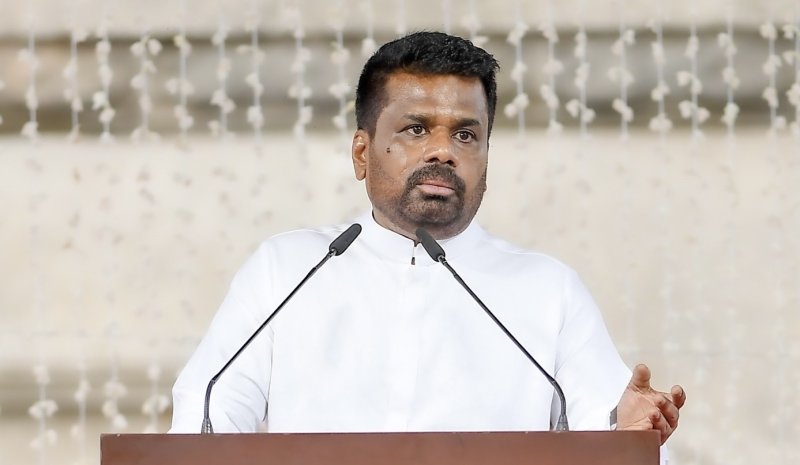 President addressed State Ceremony Concluding “Ehi Passiko” Peace Walk
The President also noted that certain isolated incidents occurring in the country from time to time can erode public confidence in religious revival. He emphasised that religious leaders bear a significant responsibility to safeguard the dignity, value and essence of religious institutions and teachings and assured that the government would provide all necessary support in this regard.
Delivering a special sermon, Melpitiye Wimalakiththi Thero remarked that in the future, whenever Buddhism is talked about in America, this historic occasion which involved the arrival of sacred relics and a sacred Bodhi sapling from Sri Lanka will be remembered. He described it as a moment of pride for Sri Lanka in the global Buddhist context.
Further addressing the gathering, President Anura Kumara Dissanayake expressed his gratitude to Venerable Pannakara Thero for accepting the invitation to visit Sri Lanka and undertake this peace mission, as well as to Venerable Melpitiye Wimalakiththi Thero for coordinating the event.
Sri Lanka has had many experiences that highlight the value of peace. We are a people who have endured the tragic consequences of a prolonged war. Therefore, all of us carry a deep understanding of how important peace is and how vital world peace is for humanity. In this regard, we must express our gratitude and respect for the efforts undertaken by Venerable Pannakara Thero and the accompanying monks.
Dhamma pilgrimages are not new to Sri Lanka; they are an integral part of our culture. The Buddha instructed his first disciples, saying: “Charatha Bhikkhave Charikam Bahujana Hitaya Bahujana Sukhaya”. Guided by this teaching, the venerable Maha Sangha across the world have, for thousands of years, travelled on Dhamma missions for the well-being of the people.
The arrival of Arahat Mahinda Thero in Sri Lanka contributed immensely to shaping our nation’s great civilisation. Later, by around the 17th century, we had lost the higher ordination (Upasampada) lineage of monks and faced the challenge of re-establishing the Sasana. Under the leadership and intervention of Saranankara Sangharaja Thero, Upali Thero, who was invited from Siam, the Bhikkhu Sasana was re-established in Sri Lanka. This was the result of a religious mission from Thailand. Likewise, Weliwita Sri Saranankara Thero undertook extensive Dhamma journeys, seeking out scriptures, dispelling misconceptions about the Sangha and conveying the true essence of the Dhamma to the people. Therefore, we have a long history of such pilgrimages and religious missions.
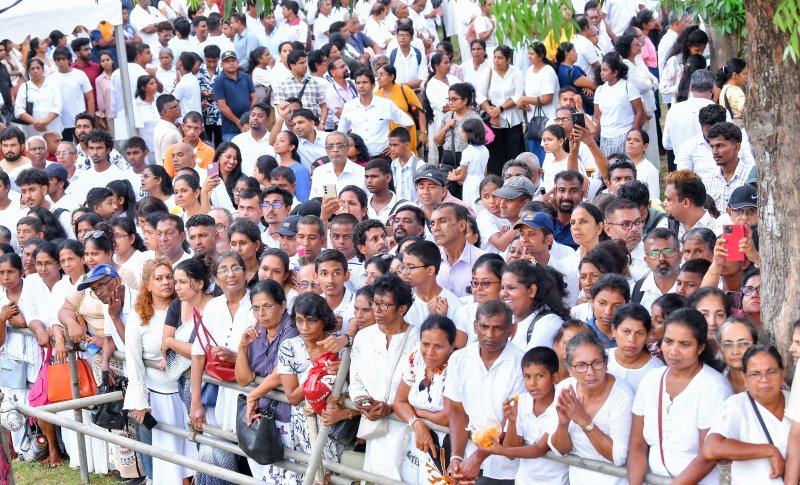
For over two thousand years, our monks have travelled from village to village, preaching the Dhamma tirelessly walking until their feet wore down and speaking until their voices faded. I believe that this recent pilgrimage by Venerable Pannakara Thero and his group has created a renewed enthusiasm for the Dhamma within our country. It demonstrated the depth of faith and trust our people have in disciplined and learned monks. We witnessed Buddhist devotees standing along the roadsides with great devotion, expressing their respect and affection. This, we believe, has been a significant effort in instilling the liberating essence of Buddhism among the people.
Looking at our history, every period of economic prosperity has been accompanied by a religious revival, while every decline in religious vitality has led to social and economic deterioration. Therefore, if we are to develop our economy and society to a higher level, a parallel spiritual revival is essential.
At present, although not widespread, certain incidents occurring from time to time are causing a decline in public confidence in religious life. Hence, all religious leaders bear a profound responsibility to protect the dignity, value, historical heritage and true essence of their respective traditions. As a government, we are prepared to provide every possible support towards this goal.
To build a peaceful and conflict-free nation, laws alone are not sufficient. We have enacted many laws in Parliament, established institutions to enforce them and provided those institutions with the necessary resources. Yet, is the country truly righteous? Are people truly law-abiding? We believe that religious institutions have a significant role to play in cultivating a just and disciplined society.
In guiding our country towards development and a peaceful society, a spiritual awakening and a society inclined towards religious values are essential. I invite everyone to contribute to this effort. Sri Lanka is a land that can offer valuable examples to the world in discussions on peace. We have experienced war, hatred, anger and mistrust. Yet, as a nation, we have gradually taken steps to overcome these divisions and to build a peaceful state and a society that respects diverse cultures.
In Sri Lanka, as in the rest of the world, the majority of people desire peace. Yet conflicts continue to arise. Even today, wars persist in several parts of the world. Even those who may temporarily claim victory in war ultimately say that what they truly seek is peace. That is the reality. While the general public aspires to peace, those in positions of power often place their faith in war.
Ordinary people seek a society free from suspicion, mistrust, hatred and anger, while extremists and conspirators pursue division and conflict driven by racism and disharmony. Thus, a small minority continues to advance the agenda of war, overpowering the peace-loving majority. Therefore, both our motherland and the world must move towards the path of peace that the majority desires.
Venerable Pannakara Thero, like us, recognises this crisis. He teaches that the root cause of this situation is the loss of mindfulness the failure to act with right mindfulness (Samma Sati). The essence of his teaching is to establish ourselves in right mindfulness. If we can do so, then regardless of hardship, threat, or danger, we can act wisely as human beings. In times of peace, humanity rises; in times of war, humanity is the first to perish. Therefore, we must resolve to act once again as mindful human beings. Venerable Pannakara Thero has initiated a new dialogue in our country on the importance of right mindfulness and for that, I express my sincere gratitude.
This country is the island of peace in the world. We are striving to make it an exemplary nation on the global stage. While we may not rank first in terms of wealth or technology, we can aspire to be number one in humanity. In this endeavour, the continuous guidance and teachings of the Maha Sangha and other religious leaders are of immense value. Through their influence, we can transform this island of peace into an island of humanity. I invite everyone to join in this effort and once again extend my sincere gratitude to the Most Venerable Pannakara Thero and the Maha Sangha.
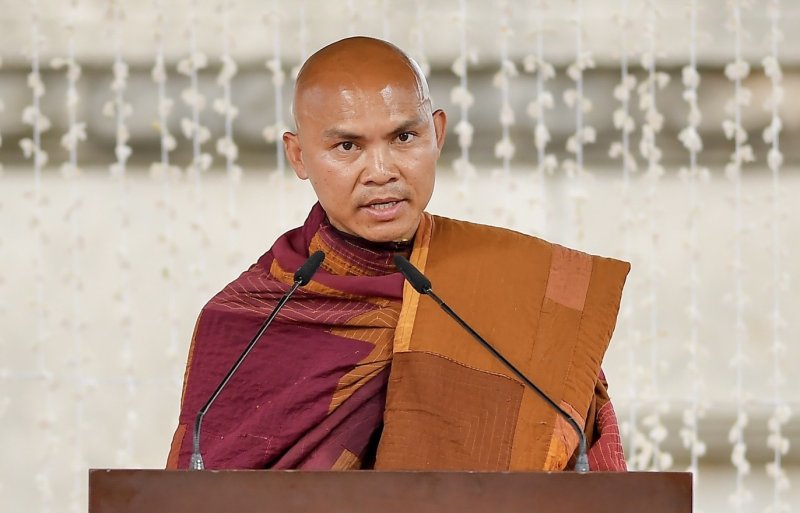 Venerable Pannakara Thero addressed Ceremony Concluding “Ehi Passiko” Peace Walk
The principal address was delivered by the Venerable Pannakara Thero.
Today we stand together at the completion of the Walk for Peace in Sri Lanka. It has not been simply a physical journey across your land. It has been a connection from one heart to another heart. Step by step, as we passed from city to city, we witnessed the enduring strength of loving-kindness and compassion that remains alive within Sri Lanka.
We walked in the rain, we walked in scorching heat and we walked barefoot on asphalt roads that tested the body and mind. Yet, with every difficulty, the people of this beautiful country responded not with disregard, but with kindness.
Roads were watered and banana leaves and flower carpets were laid down to soften the path and ease our pain.
Respect was shown. Smiles were offered. Care was given openly. This is what true strength looks like. This is what a peaceful nation looks like, and for this I offer my deepest gratitude, not only on behalf of myself and the Walk for Peace team, but, on behalf of everyone who has been touched by this journey.
Today, I would like to reflect something very important our Lord Gauthama Buddha did not only teach individuals how to live peacefully, he also gave guidance on how a nation can be survivalist and maintain peace.
There are seven essential qualities that sustain harmony in a society. And although they were taught long ago, they are deeply relevant today.
First, a nation must come together regularly in unity to discuss and reflect on what is right and beneficial to promote harmony. When people stop communicating with wisdom and understanding, divisions begins.
Second, when they gather they must meet in harmony, act in harmony and disperse in harmony. It is not enough to meet, how we treat each other matters.
Third, a peaceful nation must respect and uphold justice and ethical principal. It should not give rise to disorder through impulsive actions or any conduct that causes harm to any living being.
Fourth, respect must be given to elders, those who carry experience and wisdom. A society that neglects its elders loses its values.
Fifth, women and children must be protected. Where there is safety and dignity there is stability and growth.
Sixth, spiritual and cultural values must be preserved, sacred places, traditions and teachings serve as anchors to a nation’s cultural identity and heritage.
Seventh, a nation must respect and protect those who live a life of virtue, as virtuous citizens form the foundation for liberty, stability and moral strength in society.
If these qualities are upheld, peace does not need to be something we chase, but it becomes a natural way of life.
But, today, I want to take this one step further. Each one of us also has a world inside. Within this body and mind there is a territory. There are borders, there are conflicts, there is peace. If we cannot grow in our own inner world with wisdom, how can we expect the outer world to be peaceful.
So, ask yourself, do I meet my own thoughts with mindfulness, do I respect what is good and avoid what is harmful. Do I listen to wisdom, both within and around me? Do I cultivate kindness and patience? If each individual establishes peace within themselves, it naturally extends to families, communities, nations and ultimately the world, as peace is built not from the outside in, it is built from the inside out.
During this journey we were not alone, a very special being walked with us “Aloka”. Aloka has no voice to speak our language. Yet, he has communicated something very profound to all of us. Through his presence, we were reminded that loving kindness and compassion must not be limited. It must extend to all living beings. The way a society treats its animals reflect the depth of its humanity. And here in Sri Lanka, we have witnessed something truly inspiring. The love, the care, the protection that was shown to Aloka and the animals along the way, has been deeply moving.
Let this not end with this walk. Let it grow. Let it become a stronger. Animals are not objects, they are living beings with feelings, with fear, with trust. They depend on our kindness. Compassion is not complete unless it includes all beings, no matter how big or small.
We also express our sincere gratitude for the offering of a sacred sapling of the Sri Maha Bodhi for the “Dhammachetiya” project in Texas, United States. This is not merely a gift, but a living bridge of the Dhamma connecting Sri Lanka with the wider world. We are likewise grateful for the opportunity granted to display the Sacred Relics at the International Vesak Festival held at the Hung Dao Vipassana Meditation Centre in the United States. This is a meritorious act that will illuminate the hearts and minds of thousands.
We extend our deep gratitude to the Maha Sangha, Hon. President, Hon. Prime Minister and the people of Sri Lanka for their generosity and trust. We also wish to express our sincere appreciation to the Sri Lanka Navy, law enforcement authorities and the security forces, as well as to the veterinary, medical, and media teams for their dedicated service and commitment.
We extend our sincere gratitude to all religious leaders who welcomed us with warmth, to those who extended hospitality, to every donor and volunteer and to all those present here as well as those around the world who supported this initiative through online platforms. You are all true partners in this journey of peace. No one walks this path alone.
Finally, I leave you with a simple practice. Throughout this journey, I have repeatedly shared the same message. It is simple, yet profoundly powerful if sincerely practised.
Be mindful. Be mindful of your thoughts, mindful of your words, and mindful of your actions. And regardless of background, belief, or identity, let loving-kindness and compassion towards oneself, towards others and towards all living beings be your guiding principle. Unity does not mean that we are all the same.
Unity is the choice of peace despite the differences that exist among us. If each of us can do this, even in small ways, what we have begun here will not end here. It will continue in your homes, within your communities, and in your hearts.
Therefore, as we conclude this Peace Walk, I invite you to carry this message forward not merely as a memory, but as a daily practice. As I have often said during this journey, begin each day by writing down and reciting aloud this simple sentence:
“Today will be my day of peace.”
Thank you. May goodness, happiness, and peace be with you all.
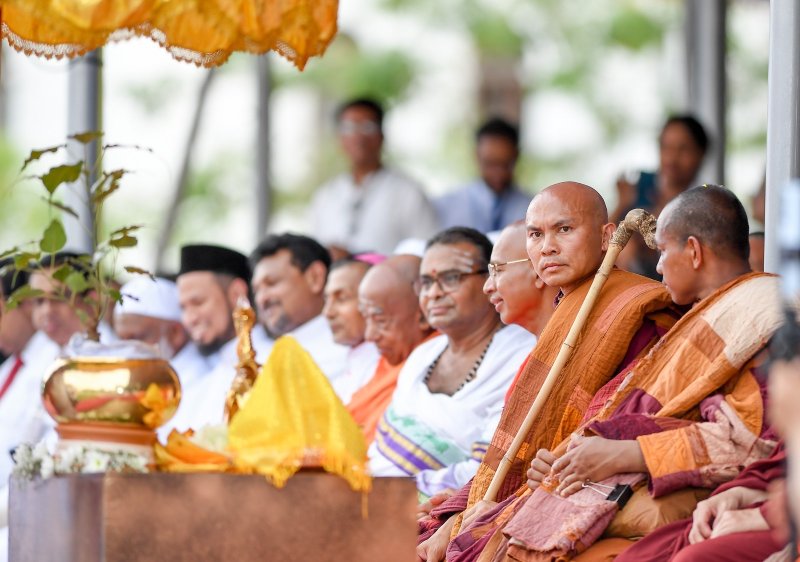
Trinikaya Maha Sangha led by the Anunayake of the Malwathu Maha Viharaya Chapter of the Shyamopali Maha Nikaya Most Venerable Niyangoda Vijitha Siri Thero, the Anunayake of the Asgiri Maha Viharaya Chapter Most Venerable Narampanawe Ananda Thero, the Incumbent of the Historic Somawathi Rajamaha Viharaya, Venerable Dr. Pahamune Sri Sumangala Nayake Thero and Venerable Melpitiye Wimalakitthi Nayake Thero were present on the occasion.
Also present were the Minister of Buddhasasana, Religious and Cultural Affairs, Dr. Hiniduma Sunil Senevi, Minister of Public Administration, Provincial Councils and Provincial Government, A.H.M.H. Abayaratne, Minister of Health and Mass Media, Dr. Nalinda Jayatissa and the Governor of the Western Province, Haniff Yusoof, along with other Ministers, State officials, Heads of the Security Forces and a large gathering of lay and monastic participants, including Diyawadana Nilame of the Temple of the Sacred Tooth Relic, Kandy Nilanga Dela Bandara participated in this event.

