
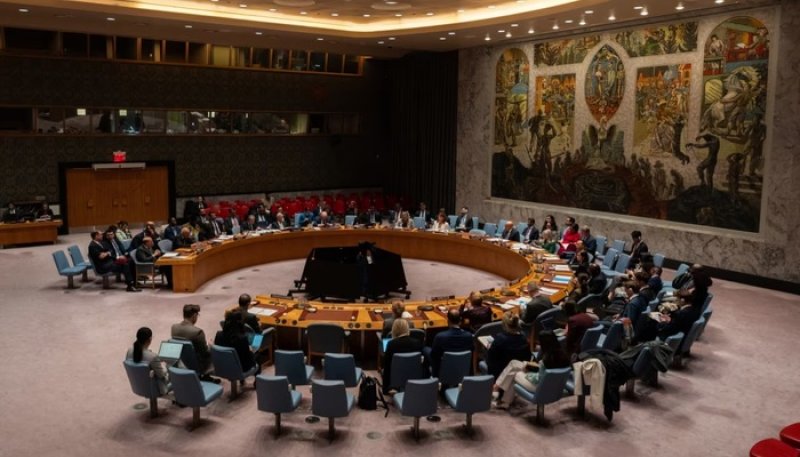











A Gulf official told CNN that the Security Council is expected to vote on Bahrain’s proposed resolution on Friday.
The official said Saudi Arabia’s Crown Prince Mohammed bin Salman had spoken with Russian President Vladimir Putin and that there was an expectation Russia would not block the resolution. The official added the crown prince was expected to speak with “relevant” officials in China, with the expectation Beijing would also not block it.
The draft resolution, which CNN has obtained a copy of, deplores Iran’s actions as violations of international law and warns of adverse impacts on international trade, energy security, supply chains and the global economy.
It stresses that ships and aircraft enjoy a right of transit passage through the Strait of Hormuz that “shall not be impeded.”
The draft resolution would authorize member states, acting individually or through voluntary A A multinational naval partnerships that notify the Security Council in advance, to use defensive measures in the strait and adjacent waters including within the territorial waters of littoral states bordering the strait to secure transit passage and deter attempts to close or obstruct navigation.
The authorization would last at least six months from adoption and would require quarterly reporting by participating states.
The draft calls on participating states to coordinate their actions and ensure operations comply with international humanitarian law and applicable international human rights law, while respecting third states’ navigation rights.
It also stresses the authorization would apply only to the Strait of Hormuz and would not establish customary international law.
Iran-backed Houthi militants said Thursday they had launched a ballistic missile attack targeting “vital objectives” in Israel’s Jaffa area.
The Houthis said the operation was carried out “in partnership” with forces in Iran and Hezbollah in Lebanon and claimed – without providing evidence – to have achieved their objectives.
The Israel Defense Forces said in a brief statement that a missile launched from Yemen was “successfully intercepted.”
Some context: After nearly a month of not directly entering the conflict, the Houthis launched their first missile attack of the war toward Israel on Saturday. The group cited US-Israeli strikes on infrastructure and what it called “crimes and massacres” against people in Lebanon, Iran, Iraq and the Palestinian territories as its reason for entering the conflict.