We believe that all parties involved in war will very soon commit themselves to World Peace
President Anura Kumara Dissanayake stated that Sri Lanka expects all parties involved in the war to commit themselves at the earliest opportunity to building a peaceful world.
The President pointed out that the current situation could have a severely adverse impact on the global economy and on people’s livelihoods. The President stated that, as a government, whilst hoping for the best, they are also preparing for the worst.
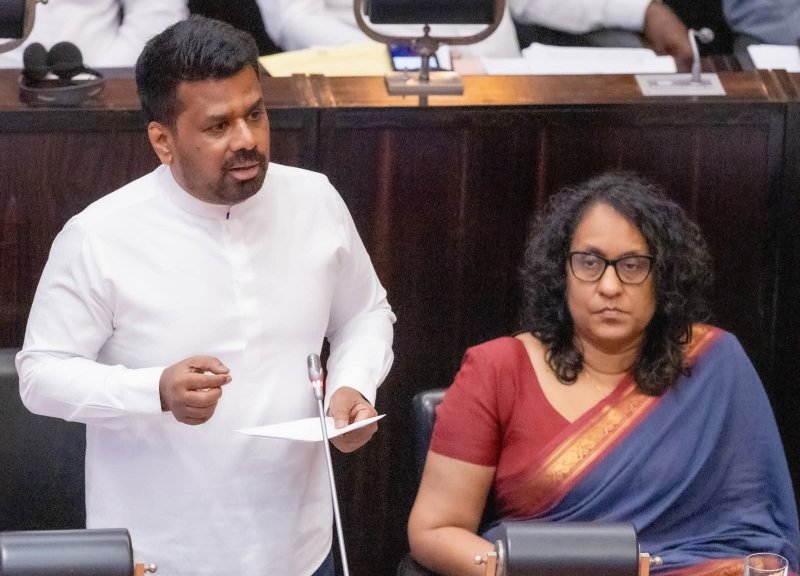
President Anura Kumara Dissanayake made these remarks today (02) while delivering a special statement in the Parliament.
The President further emphasised that, while formulating long-term plans to address crises of this nature, the Government is also preparing the necessary short-term solutions to ensure that the public does not suffer undue hardship.
President Dissanayake noted that the Government has been maintaining sound fuel management in line with existing storage capacity and that it has a clear plan regarding the energy sector and fuel supply. He also stated that steps have now commenced to increase the capacity of the oil refinery by 100 per cent since it had not undergone any refurbishment for 47 years since 1979.
The President further explained that the Government plans to invest over Rs. 30 billion in developing energy infrastructure, including the construction of a new 86,000 metric tonne storage complex in Kolonnawa; increasing the capacity of the new storage complex being built in Muthurajawela to 40,000 metric tonnes; refurbishing four oil tanks in Trincomalee under the first phase and laying a corresponding offshore pipeline system; replacing the 90-year-old pipeline from Kolonnawa to the Port with new 14-inch and 18-inch lines; and rehabilitating the 90-year-old naphtha pipeline from Kolonnawa to Kelanitissa.
The President also stated that prompt action would be taken to resolve the issues that have arisen in relation to gas supplies.
The President further clarified the Government’s plans to address the challenges arising from the current situation, including the difficulties faced by Sri Lankans overseas and the potential impact on tourism, exports, shipping and aviation sectors.
Following is the speech delivered by President Anura Kumara Dissanayake in Parliament:
I wish to present several points regarding how the current war situation, particularly in the Middle East region, may affect Sri Lanka socially and economically.
Any armed conflict creates no favourable conditions for any group of people. Moreover, in a world that is developing highly advanced and destructive weaponry, we can all understand the extent of devastation such conflicts can cause.
Therefore, Sri Lanka’s position is that all parties involved in this war must, without delay, make the necessary commitment and provide the leadership required to establish a peaceful world.
This situation poses a significant impact and threat to the global economy and to people’s livelihoods. Sri Lanka cannot escape its effects in isolation. While we are formulating a national response, we believe that, internationally, this can only be addressed through a shared commitment to peace.
As a result of the war in the Middle East, several sectors face immediate impact. One is our energy supply, oil and gas. Secondly, a large number of Sri Lankans reside overseas and issues may arise concerning them. Tourism and foreign remittances, which represent a substantial share of our economy, may also be affected. Furthermore, a significant portion of our economy depends on maritime services, as well as aviation services. We therefore face immediate repercussions across multiple sectors.
As a Government, we must take both long-term measures to address this crisis and ensure that, as a country, we mitigate its impact without allowing the nation to be overwhelmed by it.
I understand that it is not unreasonable for our people to feel a degree of anxiety. There is no point in blaming any citizen. Our people endured a very bitter past, which still lingers in their minds. Only two or three years ago, they experienced the tragedy of fuel and gas shortages, spending weeks in queues and even losing lives while waiting in line. Therefore, our society becomes alarmed even by minor disturbances. This is understandable.
However, stability cannot be restored through words alone. It can only be ensured by practically guaranteeing that people will not be subjected to hardship.
In the past, statements made by media spokespersons, the Cabinet and even the President were exposed as untrue within hours. As a result, our society has become one that is easily unsettled by minor news and prone to perceptions of instability.
Our economy has not yet been firmly stabilised. We are in the process of strengthening reserves, encouraging production and attracting investment to restore stability. It is in the midst of this journey that we face these challenges. Over the past year, we have already confronted several such events.
Soon after we assumed office, discussions arose about a potential regional conflict, which created similar anxiety. However, it was managed within a short period. Likewise, there was considerable debate in and outside the Parliament regarding the taxes imposed by the United States under its own economic strategy, with claims that the country would face danger. That too was managed successfully. Additionally, the cyclone ‘Ditwah’ had a significant economic impact, yet within three months we were able to substantially mitigate its effects and restore normalcy. Thus, recent history shows that we have successfully managed challenges.
Nevertheless, there remains uncertainty as to how far this war situation may escalate. This must be acknowledged.
We are therefore closely monitoring ongoing developments. The Central Bank of Sri Lanka is reviewing the current conditions and will present a report this evening or tomorrow morning on the potential impact on the economy, particularly in the financial sector.
The Ministry of Finance is also preparing an assessment of the impact on livelihoods and the economy, along with necessary response measures. Meanwhile, the Sri Lanka Bureau of Foreign Employment and the Ministry of Foreign Affairs are developing and implementing an action plan to address issues faced by Sri Lankans overseas.
As a Government, we bear the responsibility of ensuring essential services and facilities for the public. The ability of individuals to escape a crisis on their own is limited. One may queue to obtain fuel, but solutions to the overall crisis do not lie with individuals. The principal responsibility for finding comprehensive solutions rests with the Government. At the same time, all of us in the Parliament bear a responsibility that cannot be avoided and citizens too have a significant role. Therefore, it is our proposal that the Government and all Members of Parliament face this situation together with a unified objective and programme.
Our principal issue is that we lack sufficient storage capacity to stock fuel for two to three months. Our storage facilities operate by emptying capacity in time to receive the next shipment. Excluding the IOC facilities in Trincomalee, the total storage capacity at Kolonnawa and Muthurajawela is approximately 150,000 metric tonnes. However, we cannot maintain the full capacity at all times. Thus, operations are managed in line with scheduled shipments. At the time this crisis arose, approximately 103,000 metric tonnes were in storage. Our refinery supplies 1,800 metric tonnes daily and storage must be managed accordingly. Based on data, daily demand, shipment schedules and refinery output, we have been maintaining sound management in line with available capacity.
Accordingly, we currently hold sufficient diesel stocks for 33 days. With regard to petrol, the total storage capacity is 161,087 metric tonnes, of which 136,270 metric tonnes were available at the onset of the crisis. While some may argue that full capacity could have been maintained, this is not feasible without separate facilities for strategic reserves. We do not have a dedicated strategic stock; operational and reserve stocks are held within the same facilities. Therefore, careful management is essential. We have retained the maximum possible quantities under current conditions sufficient diesel for 33 days and petrol for 28 days. Additionally, a further shipment of 35,000 metric tonnes of petrol is scheduled to arrive on the 7th or 8th, bringing total petrol stocks to cover approximately 40 days.
We cannot bring in fuel shipments at will. Orders must be placed in line with the levels at which our storage facilities are depleted. Therefore, there is no valid argument as to why ships were not brought in. We have been operating under a highly scientific storage management system. As a result, we currently maintain petrol stocks sufficient for approximately 40 days. Furthermore, when aviation fuel supply is taken into account, our total daily requirement is around 1,800 metric tonnes. Of this, 1,080 metric tonnes are produced by our refinery, with the remaining quantity being imported.
Accordingly, we have sufficient aviation fuel stocks to meet demand for 49 days. A structured schedule is in place to bring in the required fuel shipments in line with the available storage capacity of our tanks. This assessment is based on a worst-case scenario in which no additional vessels could be brought in. However, the necessary shipments have already been arranged. Specifically, a vessel from RM Parks is scheduled to arrive on the 14th, a shipment from Sinopec on the 17th and vessels from the IOC on the 21st and 28th. All relevant confirmation agreements for these shipments have been secured and the necessary operational mechanism has been put in place.
In addition, the refinery requires crude oil for its operations. At present, we have sufficient crude oil stocks for 26 days. A further shipment, currently at sea, is due to arrive shortly and that cargo will provide supplies for an additional 18 days. Accordingly, even if no further vessels were to arrive for a period of 44 days, the refinery would still be able to continue operations. The shipments we have already ordered are on schedule and adequate reserves of petrol and aviation fuel have also been secured to ensure uninterrupted refinery operations. Therefore, under the present circumstances, no fuel shortage will arise. However, if the conflict were to escalate, we would inevitably have to respond to those developments. It is important to be realistic. As long as the situation remains at its current level, we have the necessary solutions in place. Whether the situation escalates or not is beyond our control. Nevertheless, it is the responsibility of the government to plan for all possible scenarios and that is precisely what we have done.
However, I must emphasise that the issue of storage capacity is a long-term matter. Work is currently underway on a new 86,000-metric-tonne storage complex in Kolonnawa. In addition to the construction of six new tanks, two existing tanks are being dismantled and replaced with eight new tanks. The project is scheduled for completion in 2028. The cost of constructing the six new tanks amounts to Rs. 2.32 billion, while the two additional tanks will cost Rs. 1.45 billion. Accordingly, nearly Rs. 5 billion has been allocated to expand the storage facilities at the Kolonnawa complex alone. Once completed, the capacity of the storage complex will increase by a volume sufficient to cover an additional 10 days of supply. Work has already commenced, the contract has been awarded and the project is scheduled for delivery in January 2028.
In addition, we have planned to increase the capacity of the new storage complex being constructed at Muthurajawela by a further 40,000 metric tonnes. The relevant tender is now at its final stage, with an estimated investment of Rs. 3.5 billion. A pipeline is also to be laid from Muthurajawela to Katunayake. A comprehensive development plan has been prepared for the airport in this regard. Our airport has the potential to evolve into a strong regional aviation hub. With such development, fuel demand at the airport will inevitably increase. Therefore, the airport expansion plan and the strategy to position it as an aviation hub must be supported by a corresponding fuel supply framework. Accordingly, steps are being taken to lay a dedicated pipeline from Muthurajawela to Katunayake. In parallel, we are developing additional storage capacity to accommodate a further 63,000 metric tonnes of aviation fuel. The tender for this project is also in its final stage, with an estimated investment of Rs. 16 billion. This additional 63,000-metric-tonne capacity alone will enable the storage of jet fuel sufficient for more than 40 days. We have therefore formulated a clear plan to strengthen fuel availability at the airport. The private sector has been invited to participate in this initiative, and the tender process for the necessary infrastructure to establish the airport as a major fuel supply centre will be finalised shortly.
In Trincomalee, we previously had control over 24 storage tanks. Of these, three have been allocated to Prima under an agreement. The remaining 21 tanks continue under our control. Each tank has a capacity of 10,000 metric tonnes, bringing the total available storage capacity to 210,000 metric tonnes. We have developed a phased plan to renovate these facilities. Under the first phase, four tanks have been selected for refurbishment.
Of the four tanks selected under the first phase, two have already been renovated, while work is continuing on the remaining two. However, refurbishing the tanks alone would be of little value without a proper pipeline system. Accordingly, tenders have been invited to install a pipeline system from the sea to the storage facilities. The estimated cost of this project is Rs. 7.37 billion. Once completed, the system will facilitate an operational capacity of 40,000 metric tonnes.
In addition, our fuelling facilities require further development. The relevant tender has already been called and an estimated Rs. 1.5 billion is expected to be invested in this upgrade. We are also taking steps to automate the entire vessel arrival and handling system. An allocation of Rs. 1.5 billion has been estimated for this initiative and plans are underway to call for tenders shortly.
The oil refinery was originally constructed in 1969 with a capacity of 38,000 metric tonnes. In 1979, this capacity was increased by a further 12,000 metric tonnes. Since 1979, a period of 47 years has elapsed, yet during that time our refining capacity has not been increased by a single additional metric tonne. However, we have now formulated plans to expand the existing capacity from 50,000 metric tonnes to 100,000 metric tonnes. Bids have already been invited for this expansion. To date, 15 companies have submitted bids, while a further five companies have requested a short extension. Accordingly, a total of 20 bids are expected. A structured plan has been developed to enhance refining capacity with private sector participation, while ensuring that the Government retains a share in the project. As a result, our refining capacity will be increased by 100 per cent.
Furthermore, everyone is aware of the challenges our pipeline network has faced. In particular, the pipeline from Kolonnawa to the port is 90 years old. Efforts to replace it have been ongoing for the past 20 years. We have now completed all the necessary documentation to lay two new lines, measuring 14 inches and 18 inches in diameter. The tender for this project will be issued very soon, with an estimated cost of Rs. 12.8 billion.
In addition, the Naphtha pipeline system running from Kolonnawa to Kelanitissa is 90 years old and has become highly unsafe. Replacement work is underway, with the tender now in its final stages and an estimated expenditure of Rs. 1.5 billion. Overall, approximately Rs. 30 billion has been allocated for the development of this critical infrastructure. This is precisely the kind of action that a responsible government must undertake. Plans have been formulated to address the current situation and we are systematically working to ensure energy security and to be prepared for any potential crisis.
Therefore, I am confident that we are capable of managing this crisis effectively, in a manner that will prevent any public doubt about our ability to do so in the future. However, I must emphasise once again that we do not control the circumstances that give rise to such situations. We are planning based on our capacity and capabilities, but there may be events beyond our ability to manage.
We must accept that reality. Nevertheless, we have the capacity to manage the current situation, we are closely monitoring developments and we are formulating plans to address any emerging challenges. Accordingly, a comprehensive plan has been put in place for the energy sector, with particular focus on oil supply.
Specifically, our total storage capacity for gas is 8,000 metric tonnes, while our daily requirement ranges between 1,000 and 1,200 metric tonnes. This means that we can store enough gas for only about one week. Consequently, except for two days, gas shipments are brought into the port on a daily basis. This system needs to be revised. Recently, due to a disruption in the supply from a private company, our daily gas consumption increased to 1,800 metric tonnes. At present, a shipment is held up in the Maldives, while a smaller vessel has delivered 8,000 metric tonnes. In response, we have developed a plan to increase the storage and handling capacity of our gas company.
There is a 30,000-metric-tonne storage terminal owned by a private company, originally built for the export market. We are currently in discussions with them to temporarily utilise 15,000 metric tonnes of this capacity to meet urgent domestic needs. We are grateful to the company for their willingness to assist.
These companies have been able to supply only 20 per cent to the domestic market from the export market. Due to various circumstances, when the export market collapsed, they were unable to redirect their products locally, creating a bottleneck. Since they were not exporting, they could not supply gas to the domestic market, which led to a shortage of cooking gas. For this reason, I made the specific decision to re-impose the Emergency Regulations. Under a special regulation issued through the Commissioner General of Essential Services, these companies are granted the authority to temporarily supply the domestic market while ensuring all taxes are collected. There is nothing illegal in this measure; it is purely intended to meet the needs of the people. Additionally, we have ordered 100,000 new cylinders of Litro gas, which are scheduled to arrive on the 12th. Therefore, the likelihood of a crisis in the oil and gas sector is extremely low.
Furthermore, a significant number of Sri Lankans are working abroad in the region, with approximately one million registered with the Foreign Employment Bureau. In light of this, we have prioritised their welfare in case of an emergency. A 24-hour emergency telephone service has been established at every Embassy, allowing anyone to report their problems and seek assistance at any time.
We are also examining the impact on the tourism industry. In addition, we are analysing the effects on our export markets in two ways: first, the direct impact of the collapse of export markets in countries affected by war and second, the impact of an economic crisis on export markets even in the absence of conflict. In particular, our focus is on measures to safeguard foreign currency reserves and maintain the stability of the exchange rate.
Therefore, we are implementing the necessary programmes to address both the long-term crisis and to alleviate immediate, short-term pressures. Our Ministries and government officials are working with great dedication to this end. We have mobilised the full machinery of the state as required to manage the situation. It is our responsibility, as a political authority, to provide the necessary support. Our hope is that the situation will be resolved quickly and we are preparing for the best possible outcome while also planning for the worst. This is the approach we are taking.
President’s Media Division