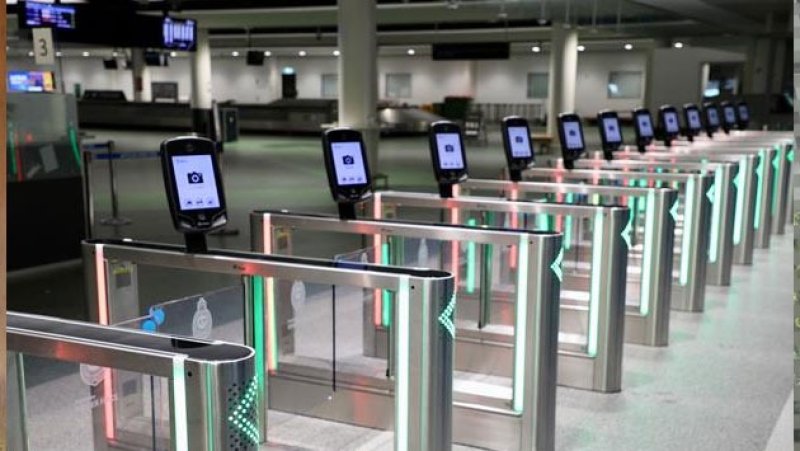
Sri Lanka is stepping into the future of travel with the launch of its first Automated Border Control (ABC) e-gates at Bandaranaike International Airport (BIA), marking a major push toward digital transformation and health-resilient border management.
The initiative, implemented by the International Organization for Migration (IOM) with funding from Japan, equips the country’s main airport with state-of-the-art biometric access and screening technology. Officials say the project not only streamlines passenger clearance but also strengthens preparedness for pandemics and natural disasters, ensuring that Sri Lanka’s borders are secure and responsive in emergencies.
At the launch ceremony, Minister of Ports and Civil Aviation Hon. Anura Karunathilaka said, “This project reflects our commitment to modernizing aviation infrastructure, reducing waiting times for passengers, and building a resilient system that can respond to health and safety challenges effectively.”
Japanese Ambassador H.E. Akio Isomata highlighted the broader impact: “Beyond improving airport efficiency, the e-gates contribute to disaster preparedness and public health safety. The recent cyclone underscored the need for borders that can handle the rapid movement of people and goods while protecting health and safety. This technology, along with Japan’s ongoing support for the BIA expansion, will transform Sri Lanka’s international gateway.”
IOM Chief of Mission Kristin Parco emphasized the human benefits, noting that travelers will now enjoy faster, smoother processing while Sri Lanka strengthens compliance with international health standards. The handover also included advanced screening and border-management equipment, enhancing security and hygiene measures.
Passengers can now expect reduced wait times and a modernized experience at Sri Lanka’s busiest airport, positioning the country as a safer, smarter, and future-ready travel hub in South Asia.