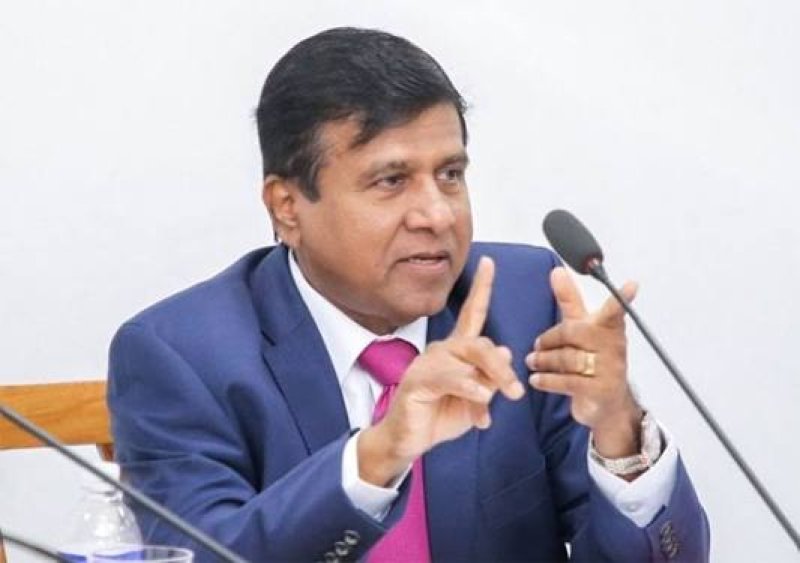
Amidst recent public scrutiny and social media campaigns targeting the Attorney General, former Justice Minister Wijeyadasa Rajapakshe has delineated the strict legal and constitutional frameworks protecting the independence of the office.
Speaking in TV programm, he addressed the growing debate regarding the potential removal of the Attorney General, emphasizing that such actions cannot be driven by political whims or public agitation.
Rajapakshe highlighted that the Attorney General functions as the state's primary legal advisor, exercising quasi-judicial power. Drawing from his own experience as Justice Minister, he noted that there were numerous instances where the Attorney General disagreed with the President or Cabinet Ministers on legal grounds. He asserted that the Attorney General’s interpretation of the law is generally final and must be respected, regardless of executive preferences, underscoring that the office is designed to operate independently of the government's political agenda.
Defending the incumbent, Rajapakshe pointed out that the current Attorney General is a career officer who rose through the ranks based on seniority and was appointed with the approval of the Constitutional Council under the provisions of the 21st Amendment. He rejected claims that the appointment was politically motivated, arguing that labeling a career public servant as "political" is factually incorrect and unfairly undermines the integrity of the Attorney General's Department.
Addressing public grievances, the former Minister advised that street protests and social media attacks are not the appropriate mechanisms to challenge the Attorney General’s decisions. Instead, he outlined the specific legal remedies available to citizens. He explained that if a party feels the Attorney General has failed to prosecute a crime or has acted erroneously, they can file for a Writ of Mandamus in the Court of Appeal to compel the AG to act, or file a Fundamental Rights (FR) petition in the Supreme Court if the AG’s actions have violated constitutional rights.
Crucially, Rajapakshe explained that the Attorney General cannot be removed arbitrarily. The office is protected by the Removal of Officers (Procedure) Act, a safeguard introduced to prevent political retribution against high-ranking officials like the AG and the Inspector General of Police (IGP). According to the Act, removal requires a formal motion in Parliament followed by a rigorous inquiry that must prove "misconduct."
Rajapakshe distinguished between a legal error and actual misconduct. He clarified that just as a judge’s incorrect ruling is rectified by an appeal rather than removal, an Attorney General’s difference in legal opinion does not constitute grounds for impeachment. Removal is reserved for proven instances of corruption, malice, or gross abuse of power, ensuring that the Attorney General maintains necessary immunity to make difficult legal decisions without fear of retribution.