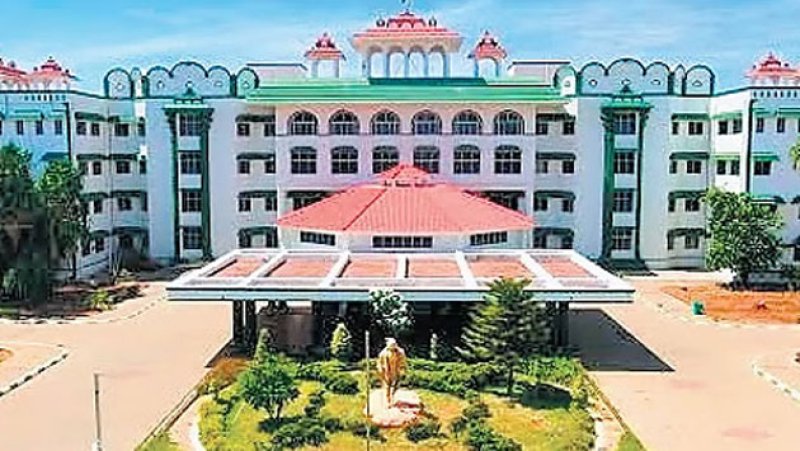
The Madurai Bench of the Madras High Court has asked the Centre to consider granting relief to a Sri Lankan Tamil woman, who married an Indian in 2018, seeking Indian citizenship on humanitarian grounds.
The court was hearing the petition filed by Fathima Riyasa, a Sri Lankan citizen, who fell in love with Abdul Jabar, an Indian, and married him in 2018 in Sri Lanka. She came to India on an Indian visa. The couple settled in Pudukkottai district and they have two children.
The petitioner’s Indian visa and Sri Lankan passport expired. She sought renewal of both and also applied for Indian citizenship. Since it was not forwarded by the District Collector to the Centre, the present petition was filed. The Centre, in a counter affidavit, submitted that since she was an illegal immigrant, her case could not be considered.
Justice G. R. Swaminathan observed that this was a case of cross-border love. Love could transcend national boundaries too. There was no constitutional or statutory requirement that marriage could be only between two citizens of a nation.
When there was no strain in the matrimonial relationship of the couple, the right to life guaranteed under Article 21 of the Constitution would include the right to live with one’s spouse. Article 21 of the Constitution was applicable to citizens and non-citizens alike, the judge said.
When the fundamental right of the petitioner was at stake, the court had to strike a balance even if there were insurmountable barriers. The judge proposed to effect such a balance by invoking Section 20 of the Passports Act, 1967. The provision empowered the Centre to issue passport or travel document even to a non-citizen, he said.
The interest of justice required that the petitioner was allowed to stay in India. If she was deported, she would be separated from her husband and children. The issue could be viewed from the perspective of the children too. They were entitled to maternal love, the judge said.
The petitioner was permitted to submit an application to the Centre seeking relief under Section 20 of the Passports Act and the Centre could favourably consider it. As an alternative, she could obtain renewal of her Sri Lankan passport and thereafter, seek extension and validation of her Indian Visa. The two courses of action were open to her, he said.