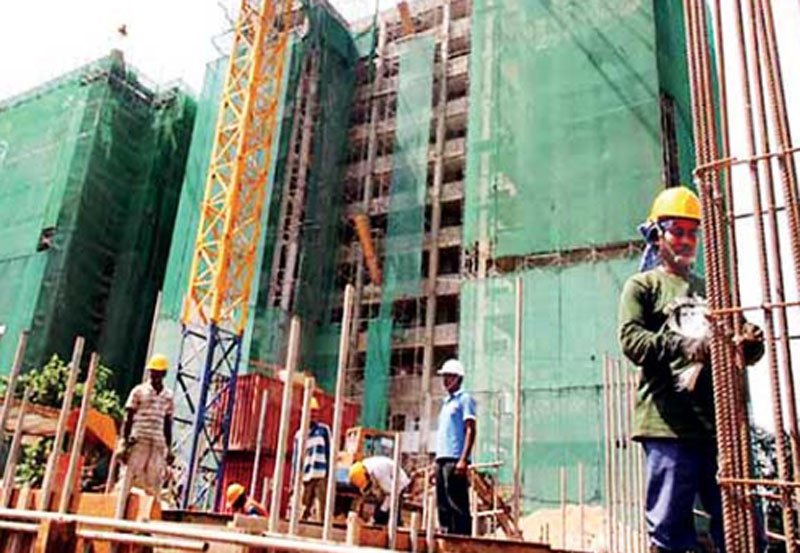
In the first quarter of the year, Sri Lanka's construction sector has shown significant resurgence, bolstered by declining borrowing costs and softer material prices.
According to the latest data, the sector expanded by 14.2 percent compared to the same period in 2023, marking a notable acceleration from the 4.0 percent growth seen in the previous quarter.
After a prolonged period of decline, the construction industry began to rebound in the final quarter of last year, signaling renewed activity in residential, commercial, and infrastructure projects. Industry insiders have noted an increase in opportunities, albeit alongside intensified competition in tender processes.
A key factor contributing to the sector's recovery has been the strengthening of the Sri Lankan rupee, which has helped to mitigate the impact of previously skyrocketing import costs. This has made construction materials more affordable, easing financial pressures on builders and developers.
Moreover, the reduction in borrowing rates has provided additional support, although some banks have been criticized for not passing on the full benefits of lower policy rates to borrowers, maintaining relatively high lending rates.
Despite these positive developments, access to bank finance remains challenging, with complaints about the stringent attitudes of bank staff towards loan applications. Calls have been made for the Central Bank to enforce stricter measures on banks that fail to facilitate easier access to credit under the improved financial conditions.
During the first quarter, the construction sector's contribution to Sri Lanka's overall economy grew to 6.4 percent, up from 5.9 percent in the previous quarter. This expansion underscores the sector's crucial role in job creation and economic growth, with its impacts extending across various related industries.
However, the sector has faced significant challenges in recent years due to successive crises, including the pandemic and economic instability, which have disrupted its historical role as a leading contributor to the country's GDP in the post-war period. As Sri Lanka navigates these complexities, the revival of the construction sector remains pivotal for broader economic recovery and stability.