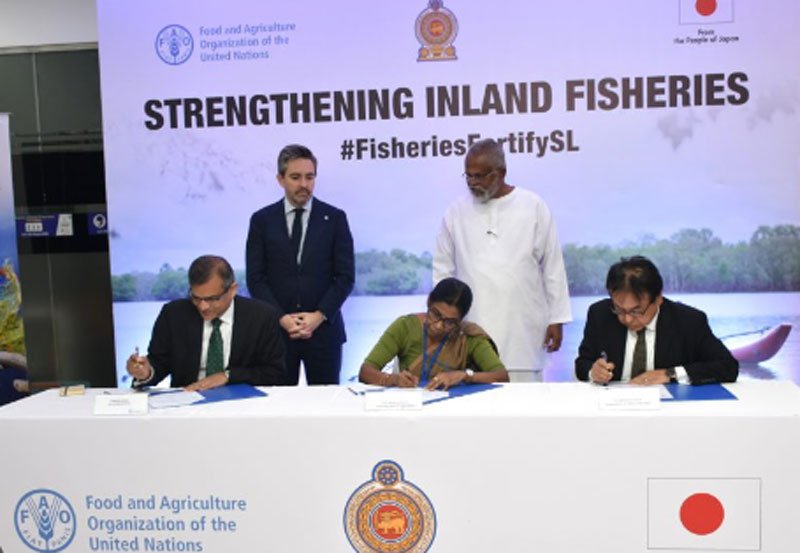
Sri Lanka's inland fisheries sector received a substantial boost with a US$3 million grant from the Japanese government, facilitated through the Food and Agriculture Organization of the United Nations (FAO) in collaboration with the Ministry of Fisheries.
The grant, aimed at revitalizing the sector, comes at a crucial time as the country grapples with economic challenges.
The signing of a Memorandum of Understanding (MoU) on Thursday marked the beginning of a project set to directly benefit approximately 3,000 inland fishers, along with 40 farmers engaged in mini hatchery operations and 20 farmers specializing in fish feed preparation. Beyond the direct beneficiaries, the project is anticipated to have a positive impact on indirect stakeholders such as family members, consumers, dry fish producers, and members of the research and academic community.
Minister of Fisheries, Douglas Devananda, emphasized the importance of the grant in rejuvenating a sector that has suffered due to the nation's economic crisis. He highlighted the historical significance of Sri Lanka's inland fisheries sector in contributing to the economy and stressed the need for sustainable benefits for all involved stakeholders.
The ambitious project entails the establishment of four community-operated mini hatcheries across key districts including Batticaloa, Mullaitivu, Anuradhapura, and Monaragala. Additionally, it involves upgrading four NAQDA Aquaculture Development Centers and one community-operated mini fish breeding center to bolster breeding and rearing capacity. Efforts will also focus on enhancing fingerling stocks in selected reservoirs, developing brood stock for breeding units, and promoting cage culture for seed rearing among fisher communities.
The one-year initiative also encompasses the provision of three live fish transportation trucks to NAQDA to facilitate the transportation of fingerlings, the integration of digital technology into inland fisheries operations, and the enhancement of technical capacities among officers and fishers in production, management, processing, and value addition within the sector.
Japanese Ambassador Hideaki Mizukoshi emphasized Japan's commitment to supporting Sri Lanka's fisheries development, citing the shared significance of the fisheries sector to both countries' economies and cultures. The Ambassador reaffirmed Japan's dedication to strengthening Sri Lanka's fisheries sector, thereby contributing to food security and livelihood improvement.