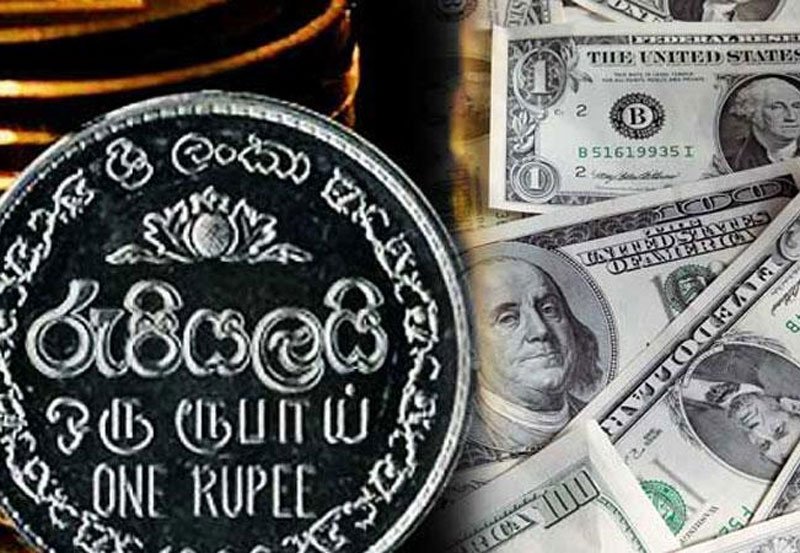
Sri Lanka’s gross official reserves increased by 431 million dollars to 4,951 million US dollars in March 2024 from 4,520 million dollars in February, according to data from the central bank.
Gross official reserves encompass both monetary and fiscal reserves of the government, typically sourced from loans and grants.
Although gross official reserves were reported as 4.9 billion dollars by March, data reveals that the central bank’s net foreign exchange position was a negative 2.2 billion US dollars due to its borrowing.
The central bank purchased over 400 million dollars in January and February and also allowed the exchange rate to appreciate as part of its deflationary policy. However, due to settling official liabilities, the reserve numbers did not increase.
By February 2024, the central bank held loans to India, the IMF, and had 3.2 billion dollars in swaps, which are gradually being settled with reserves accumulated from deflationary policy or from dollars bought outright in current transactions.
Engaging in swaps with domestic counterparties allows the central bank to effectively create money. However, mis-targeted rates may occur if the generated rupees are not absorbed, potentially resulting in a debt burden if the funds are utilized for 'reserves for imports'.
Under a fixed policy rate, using reserves for imports or unwinding swaps leads to additional money printing, mis-targeted rates, and exacerbates currency crises when private credit expands, analysts caution.
Despite a predominantly deflationary monetary policy, private credit growth has been observed, contributing to a surplus in the balance of payments.
Analysts have cautioned that under flexible inflation targeting, rate cuts claiming low inflation, coupled with inflationary policy (such as standing lending window or reverse repo operations) when private credit expands, can shift the balance of payments to a deficit and exert pressure on the rupee.
Inflationary pressures subside as private credit contracts, prompting rate hikes to correct mis-targeted rates, which eventually reflects in the price index (measuring 12-month changes) about 12 to 18 months later.
Effective debt repayment or reserve accumulation necessitates curbing domestic investments at suitable interest rates unrelated to the inflation index.