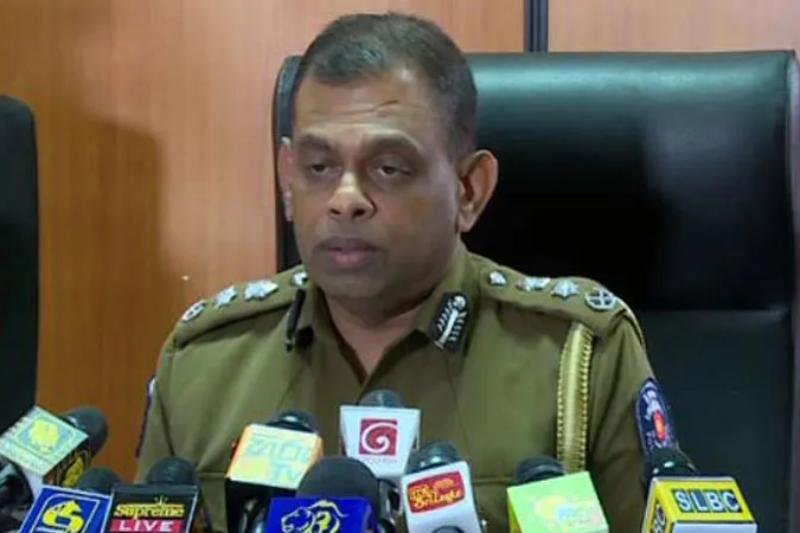
The Supreme Court yesterday set a fundamental rights (FR) petition challenging the appointment of IGP Deshabandu Tennakoon for consideration on April 02. The petition was filed earlier this month by Prof. Savitri Gunasekara.
During a session presided over by a 3-member Supreme Court judge bench led by Justice Preethi Padman Surasena, the petitioners were directed to send notices to the respondents.
As a result, the petition has been scheduled for consideration on April 02.
The petitioner is seeking a Supreme Court ruling to invalidate the appointment of the police chief.
The respondents named in the petition include Speaker Mahinda Yapa Abeywardena, members of the Constitutional Council (CC), IGP Tennakoon, and several others.
Speaker Abeywardena faced criticism for 'unconstitutionally and unlawfully' using his deciding vote to confirm IGP Deshabandu Tennakoon's appointment when the other members of the Constitutional Council were divided on the matter.
Reports indicate that four CC members voted in favor of the appointment, while 2 voted against it, and 2 abstained. However, the Speaker considered the abstentions as votes cast against and used his decisive vote to proceed with the appointment.
Earlier this month, His Eminence Malcolm Cardinal Ranjith, the Young Journalists’ Association, the Centre for Policy Alternatives, and Niroshan Padukka of Samagi Jana Balawegaya (SJB) also filed FR petitions contesting the appointment of IGP Tennakoon.
The petitioners argue that Tennakoon neglected his duties during his tenure as the Senior Deputy Inspector General of Police (SDIG) of the Western Province when the 2019 Easter attacks occurred and a pre-mediated attack was launched on the ‘GotaGoGama’ protest site at Galle Face Green, where several protesters were severely assaulted.
They emphasize that the role of the police chief, responsible for enforcing the law in the country, should be entrusted to an individual with humane qualities, rather than someone who acted against their assigned duties and violated basic human rights.