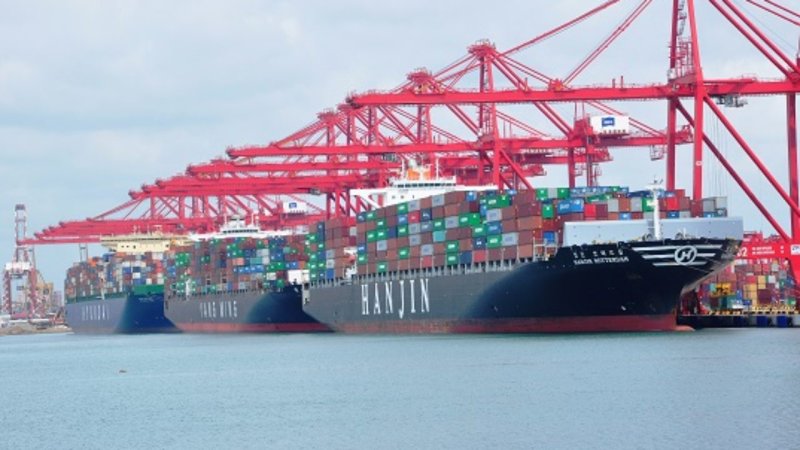
Sri Lanka is grappling with a sharp escalation in shipping costs as exporters contend with rising freight rates on West-bound routes, a trend that industry analysts caution could extend to the East.
The surge is attributed to ships and containers circumventing the Red Sea to avoid potential threats from Houthi attacks, resulting in significant delays in their journey around Africa.
Yohan Lawrence, Director General of Sri Lanka’s Joint Apparel Association Forum, revealed that sailing times for exports to the European Union and the USA East Coast have surged by approximately 12 to 14 days. Lawrence noted that rates to certain European ports have skyrocketed by $2,000 to $3,000 per 20-foot container, leading to a doubling of freight costs in some instances.
Import containers from East Asia have seen comparatively lesser increases. An importer sourcing goods from Shanghai reported an increase from $900 to $1,000 to $1,500 to $1,600 per container. However, the importer highlighted that container availability has also tightened.
Despite the current surge, freight rates are still below the peaks observed during the global inflation bubble caused by actions of the US Federal Reserve. At its highest point, rates reached around $10,000 per 40-foot container.
As vessels navigate around Africa, the extended journey time poses challenges for timely returns to East Asia, impacting ship calls and container availability. Rohan Masakorala, Chief Executive of the Colombo-based Shippers’ Academy, explained, "Going around Africa has increased the time to three weeks when the return journey is counted. Both the supply of containers and availability of ships will reduce, affecting Eastern routes as well."
The repercussions are felt keenly by apparel exporters racing against summer season deadlines. With reduced ship calls to Colombo, some exporters are combining shipments in January to meet delivery schedules. Failing to meet deadlines may necessitate airfreighting shipments, leading to additional costs.
Colombo Port, meanwhile, has witnessed a surge in transshipment volumes as ships navigating the Cape of Good Hope unload containers intended for Middle Eastern ports. The evolving situation prompts exporters and stakeholders in Sri Lanka to brace for continued challenges in the global shipping landscape.