Israel prepared to defend itself on Thursday at the top UN court against accusations of genocide in the Gaza Strip.
As Israel's war against Hamas rages in Gaza, the International Court of Justice in the Hague was set to hold two days of hearings in a case brought by South Africa in December claiming the war violates the 1948 Genocide Convention.
"The State of Israel will appear before the International Court of Justice to dispel South Africa's absurd blood libel, as Pretoria gives political and legal cover to the Hamas rapist regime," said Israeli government spokesperson Eylon Levy.
The hearings will deal exclusively with South Africa's request for an emergency order that Israel suspend military action in Gaza while the court, also known as the World Court, hears the merits of the case - a process that could take years.
Colombia and Brazil expressed their support of South Africa late on Wednesday.
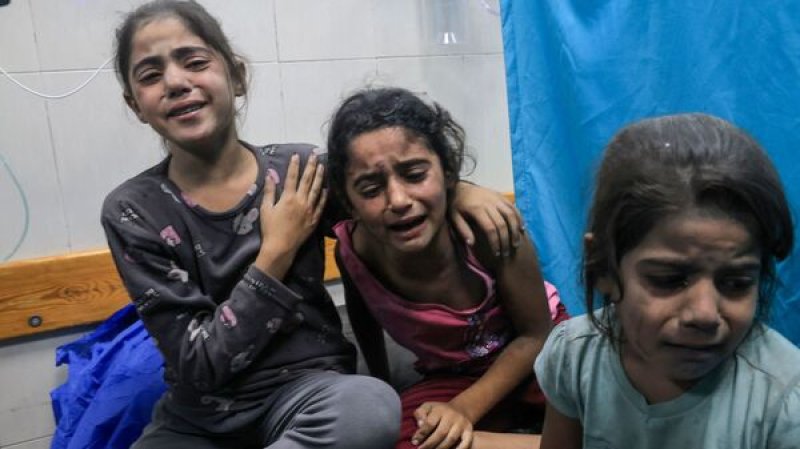
Since Oct. 7, Israeli forces have laid waste to much of Gaza, and nearly all its 2.3 million people have been driven from their homes at least once, causing a humanitarian catastrophe. More than 23,000 Palestinians have been killed.
In a statement after the case was filed late last year, the Palestinian Authority's foreign ministry urged the court to “immediately take action to protect the Palestinian people and call on Israel, the occupying power, to halt its onslaught against the Palestinian people, in order to ensure an objective legal resolution.”
The United States rejected South Africa's genocide claims, while urging Israel to do more to protect Palestinian civilians.
"Allegations that Israel is committing genocide are unfounded," State Department spokesperson Matt Miller said in a statement.
"In fact, it is those who are violently attacking Israel who continue to openly call for the annihilation of Israel and the mass murder of Jews."
Miller defended Israel's "right to defend itself against Hamas’ terrorist acts", while adding that Israel must "comply with international humanitarian law" and "look for more ways to prevent civilian harm and to investigate credible allegations of violations of international humanitarian law when they arise."