Japan's Meteorological Agency has downgraded all tsunami warnings along the Sea of Japan to advisories. But the agency is urging residents to remain on the alert for more possible quakes and tsunami
- At least six people have been reported dead in Ishikawa Prefecture on the Sea of Japan, after a magnitude 7.6 earthquake struck the region on Monday afternoon.
.
Several cities in Ishikawa observed tsunami. Wajima reported one over 120 centimeters and Kanazawa recorded one at 90 centimeters.
Police in Ishikawa say one elderly man was confirmed dead after being rescued from a collapsed house. They say they've confirmed the death of five others.
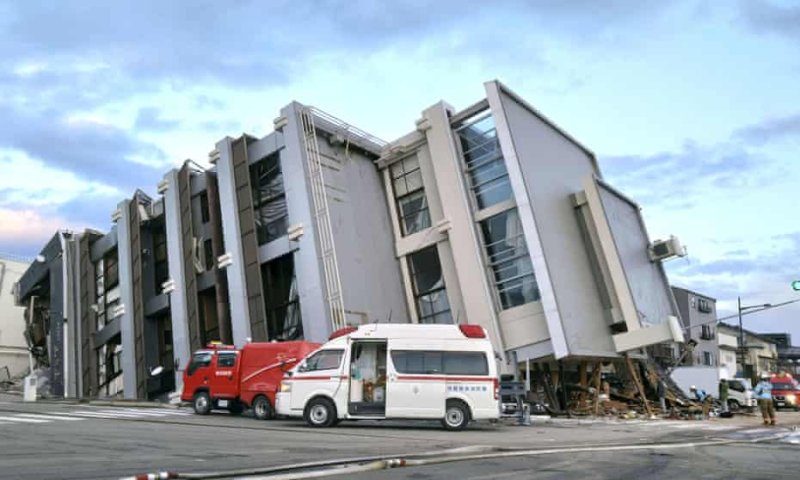
The fire department says it has received more than 50 reports of collapsed houses. They are also responding to reports of people trapped under damaged buildings. Authorities and hospitals told NHK that dozens of people have been injured in four other prefectures including Niigata and Toyama.
City officials in Wajima say a fire broke out in the center of the city, damaging more than 50 stores and houses.
The Meteorological Agency says that following the magnitude 7.6 earthquake, it has observed about 100 jolts in the region.
Police in the city of Himi, Toyama Prefecture, say they have received reports of cracks in roads at several locations. A city official in Oyabe received several reports of broken water pipes.
City officials in Nomi, Ishikawa Prefecture, say that at one point about 100 people were taking shelter in city hall.
Hokuriku Electric Power Company says it has shut down two generators at its Nanao Ota thermal power plant in the city of Nanao, Ishikawa Prefecture.
Officials say tens of thousands of households in Ishikawa, Niigata and Toyama prefectures are without power.
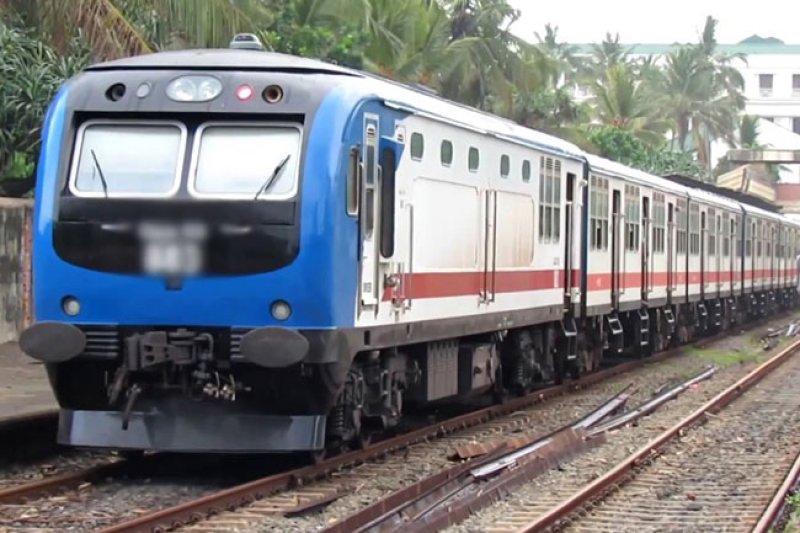
Shinkansen bullet train services are also affected. The Akita, Hokuriku and Joetsu Shinkansen lines were partially suspended on Monday.
The Nuclear Regulation Authority says a blast and the smell of something burning were observed at the Shika nuclear power plant in Ishikawa Prefecture. The operator says it lost power from a transformer, but the two nuclear reactors can function properly using backup systems.
Japan's major mobile phone carriers say they are suffering service disruptions in the prefectures hit by the earthquakes.
Fixed-line carrier NTT West also says its internet and IP phone services may not be available in some areas of Ishikawa Prefecture. There are concerns that emergency phone services are also down.
Tsunami are also a risk in neighboring countries.
Weather authorities in South Korea say they have observed tsunami. The authorities say further waves could come and last longer. The country's public broadcaster is urging people in coastal areas to evacuate to higher ground.
Meanwhile, authorities in Russia and North Korea have been urging residents to stay on the alert.
Four bullet trains, whose high-speed journeys were halted when a powerful earthquake struck Japan on Monday, have now resumed service to their destinations, according to Japan’s public broadcaster NHK.
The high-speed trains had been stranded between the central Japanese cities of Toyama and Kanazawa following the 7.5 magnitude tremor.
After being stationary for more than 11 hours, two trains arrived at the Toyama station at 4 a.m. local time on Tuesday (2 p.m. ET on Monday), officials said. Another two trains traveling in the opposite direction arrived at the Kanazawa station in Ishiwaka prefecture.
Nearly 1,400 passengers had been stranded inside the high-speed trains, NHK said, citing Japan Railways West.
The broadcaster said there were no reports of anyone on the trains becoming ill during the wait. CNN, NHK