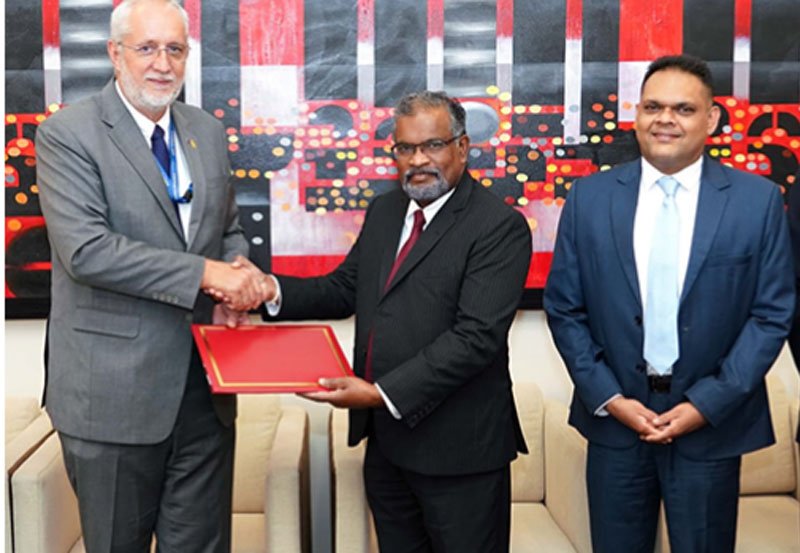
Sri Lanka and the European Union (EU) have formalized a financial agreement amounting to €15 million, aimed at advancing the principles of a circular economy and sustainable consumption and production within the food sector.
The EU grant intends to bolster food accessibility for vulnerable populations by optimizing distribution channels and mechanisms, thereby minimizing food waste. Additionally, the funds will be utilized to repurpose food waste into valuable farming inputs such as organic fertilizer and animal feed.
Moreno Carmen, the Ambassador of the European Union to Sri Lanka and the Maldives, highlighted the challenges faced by Sri Lanka, including resource scarcity and the need for effective environmental protection. Carmen emphasized the potential for a circular economy model to drive technological development, innovative business models, and entrepreneurship, fostering a robust economy.
Promoting circular economy practices is deemed crucial for Sri Lanka to mitigate future crises, establish food security, and enhance sustainability. The European Union expressed its commitment to supporting Sri Lanka in improving its food surplus/waste recovery system and aiding food producers.
The EU's grant, titled 'Promoting a Circular Economy in the Food Sector,' amounts to €15 million. Following the agreement's signing, the EU will engage implementing partners for the efficient delivery of the support.
This initiative aligns with global sustainability goals, including the Paris Agreement and the 2030 Agenda for Sustainable Development. Specifically, it contributes to the EU's Green Deal and addresses Sustainable Development Goal (SDG) 12 on responsible consumption and production. Furthermore, it supports Sri Lanka's commitments under the 2021 updated National Determined Contributions (NDCs) and the National Policy on Sustainable Consumption and Production.
The project seeks to alleviate Sri Lanka's economic crisis by enhancing economic resilience, improving food security and nutrition, and mitigating the impact of human activities on health, the environment, biodiversity, and greenhouse gas emissions associated with transportation and disposal.
The specific objectives of the project include reducing losses, increasing recovery, processing, and supply of edible and safe food surplus, as well as improving the sustainability of production, distribution, and consumption models related to food waste and single-use plastic food packaging.