
President Dissanayake emphasized that a change in attitudes is essential to make sport an integral part of people’s daily lives and a culture.
He stated that fostering such a sporting culture would play a vital role in addressing current social challenges, including the rising number of road accidents and the increasing involvement of young people in drug abuse, while helping to build a healthy, disciplined and responsible future generation.
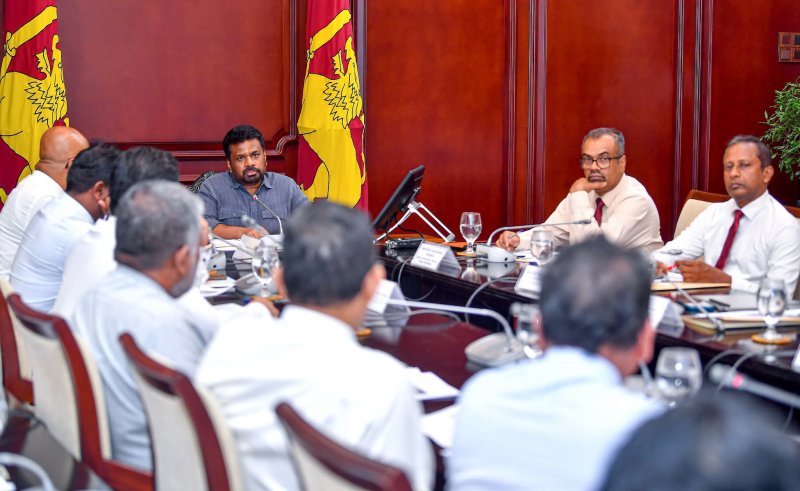
President Dissanayake made these remarks during a discussion held at the Presidential Secretariat to review the progress of projects implemented under the 2026 budget allocations for the Ministry of Youth Affairs and Sports.
During the discussion,he stressed that sport should not be viewed solely as a competitive pursuit, but as a way of life that is deeply embedded in society. President further emphasised that sporting events should be organised not only to enable athletes to achieve competitive success, but also to inspire wider public participation and cultivate a vibrant sporting culture across the island.
The President also highlighted the importance of identifying talented athletes, providing them with systematic training and world-class facilities and preparing them to compete successfully at the 2028 Olympic Games.
Emphasising the need to develop a generation of athletes capable of competing and excelling internationally, he stated that we requires a highly skilled cadre of coaches with the knowledge and expertise necessary to nurture elite sporting talent. President Dissanayake instructed officials to formulate a comprehensive plan to strengthen the country’s coaching capacity, noting that such an initiative is essential to elevating Sri Lankan sport to international standards.
The meeting included a comprehensive review of projects implemented during 2026 and discussions on the plans, priorities and funding requirements of the Ministry of Youth Affairs and Sports and its affiliated institutions for 2027. These included the Department of Sports Development, the Sports Medicine Institute, the National Institute of Sports Science, the Sugathadasa National Sports Complex Authority, the Anti-Doping Agency, the National Youth Corps, the National Youth Services Council and the National Centre for Leadership Development.
Progress and future plans relating to major infrastructure projects under the Ministry were also reviewed, including the construction of the Mannar District Sports Complex, the Kilinochchi District Sports Complex and the Kalmunai Sandangani Stadium, as well as the refurbishment of the Sugathadasa Indoor Stadium and the Diyagama International Sports Complex. He also reviewed the progress of the proposed High Performance Centre, a state-of-the-art facility equipped with modern technology and advanced training infrastructure designed to enhance the performance of Sri Lankan athletes and improve the country’s competitiveness on the international stage.
The discussion was attended by Minister of Youth Affairs and Sports Sunil Kumara Gamage, Minister of Labour and Deputy Minister of Finance and Planning Anil Jayantha Fernando, Deputy Minister of Youth Affairs Dinidu Saman Hennayake, Deputy Minister of Sports Sugath Thilakaratne, Deputy Minister of Economic Development Nishantha Jayaweera, Secretary to the President Dr. Nandika Sanath Kumanayake, Chief of Staff to the President Prabath Chandrakeerthi, Senior Additional Secretaries to the President Russell Aponsu and Kapila Janaka Bandara, Secretary to the Ministry of Finance, Planning and Economic Development Dr Harshana Suriyapperuma and senior officials of the Ministries of Finance and Youth Affairs and Sports