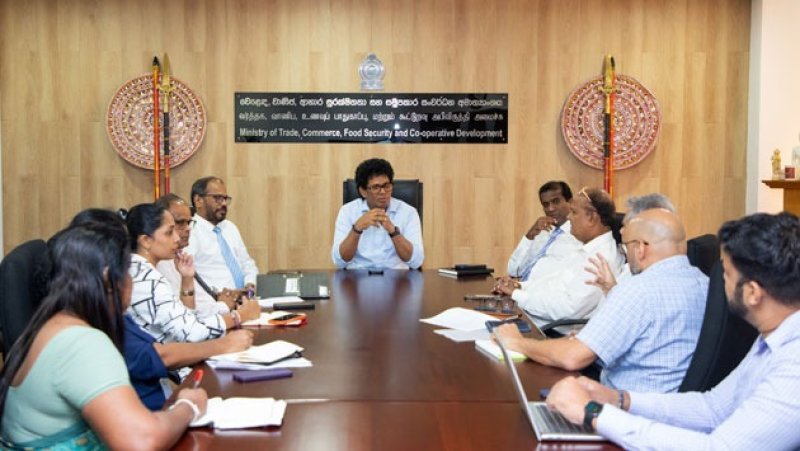
The meeting, held at the Ministry of Trade, Commerce, Food Security and Cooperative Development on Tuesday (07), focused on ensuring the resilience of the country’s apparel sector as global regulatory and market challenges intensify.
A major part of the discussions centred on the ongoing United States “Section 301 Investigation” covering trade practices in more than 60 countries, which could have implications for Sri Lanka’s export competitiveness. Government representatives said engagement with US authorities is ongoing to safeguard market access and address tariff-related concerns.
Recent US measures linked to forced labour compliance under the Trade Act of 1974 were also reviewed, with officials confirming that a Cabinet-approved response mechanism is already in place, supported by a dedicated committee tasked with examining existing trade frameworks.
Authorities reiterated that Sri Lanka remains committed to international labour standards and is strengthening its domestic legal system to align with global expectations, while seeking to protect the country’s reputation in key export destinations.
JAAF representatives highlighted the strategic importance of maintaining strong access to the US market, which accounts for a significant share of Sri Lanka’s garment exports, alongside the European Union and United Kingdom. They also pointed to structural challenges such as reliance on imported raw materials and rising competition from regional producers.
Both sides expressed confidence that continued government–industry coordination would help stabilise the sector and support longer-term export growth, with Sri Lanka targeting US$30 billion in total exports by 2030.
JAAF officials said the engagement signalled a constructive path forward, particularly at a time when global trade conditions remain uncertain, and stressed the importance of sustained dialogue to secure the industry’s future competitiveness.