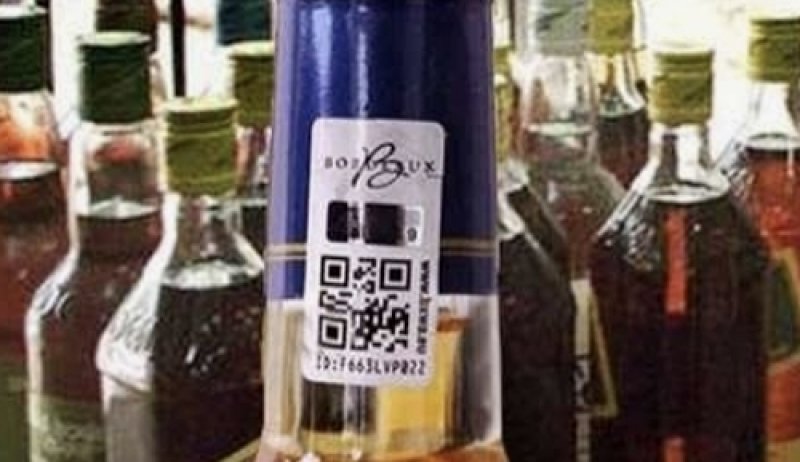
Introduced in January 2022, the initiative was designed to ensure accurate tax collection from all locally produced liquor by making it mandatory to affix security stickers on each bottle.
Since its implementation, excise revenue has shown steady growth. The department reported earnings of Rs. 170 billion in 2022, an increase of Rs. 30 billion compared to 2021. Revenue rose further to Rs. 178 billion in 2023 and reached Rs. 226 billion in 2024.
In the first nine months of 2025, the department generated Rs. 190 billion, exceeding the government’s target of Rs. 177 billion for the period by Rs. 13.4 billion. The total revenue target for 2025 stands at Rs. 242 billion.
Former Excise Commissioner General M.B.N.A. Pemaratne stated that the department achieved over 107 percent of its target during this period, marking an 18 percent increase compared to 2024.
Initial resistance from some liquor manufacturers, who failed to comply with the sticker requirement, had led to an estimated 50 percent loss in potential tax revenue. However, intensified investigations and enforcement raids helped bring the situation under control.
Officials noted that beyond boosting revenue, the programme has also improved product quality standards and made it easier to identify counterfeit and substandard liquor in the market.
The project, which began on January 3, 2022, was implemented with technical support from Madras Security Printers. Each security sticker costs approximately Rs. 1.21, according to the Ministry of Finance Sri Lanka.
The Ministry stated that the system now covers 70 licensed liquor manufacturers and 18 importers nationwide, with two types of seals—Foolproof Stickers and Digital Printing—being used based on production capabilities.
A related digital application has also been developed and submitted to the Computer Emergency Readiness Team Sri Lanka, following recommendations by the Committee on Public Enterprises.