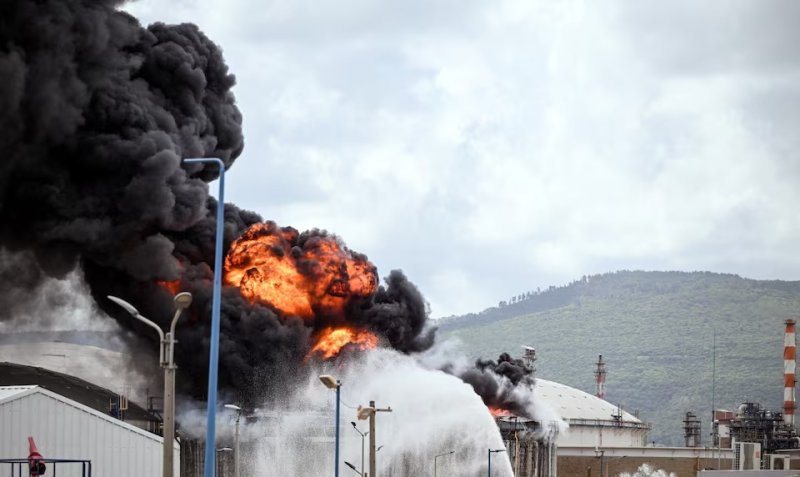
The apparent strike on the Kuwait-flagged Al-Salmi is the latest in a string of assaults on merchant vessels by missiles or explosive air and sea drones in the Gulf and Strait of Hormuz since the U.S. and Israel attacked Iran on February 28.
The month-long conflict has spread across the Middle East, killing thousands, disrupting energy supplies and threatening to send the global economy into a tailspin.
Crude oil prices briefly spiked anew after Kuwait's state news agency reported the attack on the tanker, which can carry around 2 million barrels of oil worth more than $200 million at current prices.
Kuwait Petroleum Corp, the ship's owner, said work was underway to assess damage and warned of a possible oil spill.
Authorities in Dubai later said they had been able to bring the fire under control following a drone attack on the tanker. No injuries have been reported, they said.
The jump in oil and fuel prices has started to weigh on U.S. household finances and become a political headache for Trump and his Republican Party ahead of the November midterm elections, having vowed to lower energy prices and ramp up U.S. oil and gas production.
The U.S. national average retail price of gasoline crossed $4 a gallon for the first time in more than three years on Monday, data from price-tracking service GasBuddy showed, as tightening global supplies push U.S. crude prices above $101 a barrel.
Attacks by both sides is showing no signs of easing, with fears of a wider conflict growing.
Iran-aligned Houthis entered the war by firing missiles and drones at Israel in recent days and Turkey reported a ballistic missile launched from Iran had entered Turkish airspace before being shot down by NATO air and missile defenses.