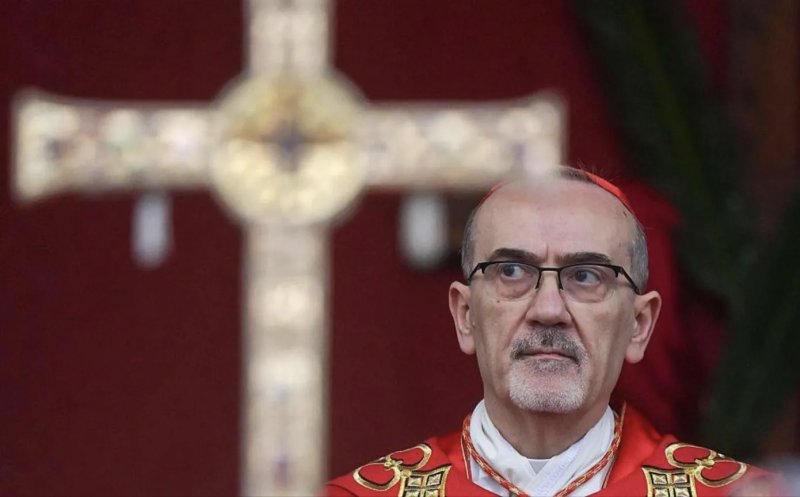
Benjamin Netanyahu said Cardinal Pierbattista Pizzaballa, who is head of the Catholic Church in the Holy Land, had been asked not to enter the church out of concern for his safety. He said Iran had repeatedly targeted Jerusalem's holy sites with ballistic missiles.
The decision to block the cardinal from entering Christianity's most sacred site had been criticised by several Western nations.
The US ambassador to Israel, Mike Huckabee, said it was an "unfortunate overreach" that was "difficult to understand or justify".
Cardinal Pizzaballa and the Reverend Francesco Ielpo were stopped outside the church believed to be the site of Jesus Christ's crucifixion, as they were planning to hold a Mass to mark the start of Holy Week, church authorities said.
Cardinal Pizzaballa's office said it was "the first time in centuries" a Latin Patriarch had been turned away from the holy site on Palm Sunday, which marks Christ's return to Jerusalem.
He and Rev Ielpo had been "compelled" to turn back from the church, where Christ was also believed to have been buried and subsequently resurrected, it said.
"This incident is a grave precedent and disregards the sensibilities of billions of people around the world, who during this week, look to Jerusalem," a statement from the patriarchate said.
"This hasty and fundamentally flawed decision, tainted by improper considerations, represents an extreme departure from basic principles of reasonableness, freedom of worship, and respect for the status quo."
The patriarchate said it had followed all "imposed restrictions" and acted responsibly since the war began, adding that Sunday's decision was "a manifestly unreasonable and grossly disproportionate measure".
Cardinal Pizzaballa later said while he did "not want to force the issue", "we had not asked for anything public, just a brief and small private ceremony".