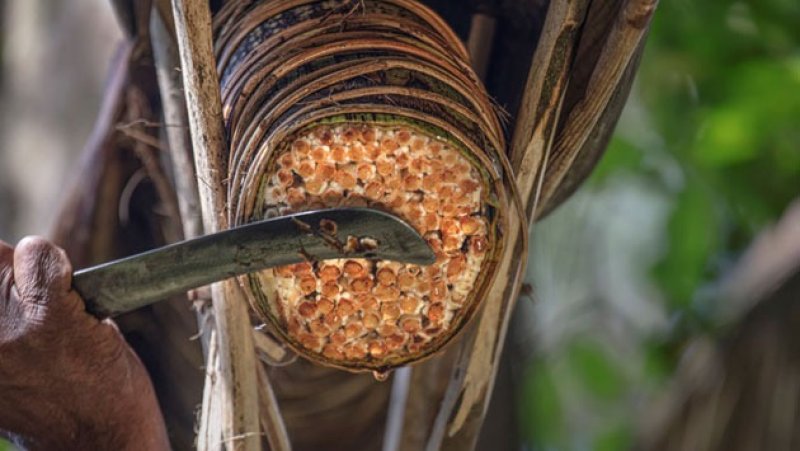
Sri Lanka’s ancient indigenous practice of Kithul Madeema or Kithul Kapeema—the traditional method of tapping sap from the Kithul palm—has been officially inscribed on the UNESCO Representative List of the Intangible Cultural Heritage of Humanity.
The announcement was made on December 11, 2025, during the 20th Session of the Intergovernmental Committee for the Safeguarding of Intangible Cultural Heritage (ICH) held in New Delhi, India.
Kithul Madeema, practiced for centuries, involves a sophisticated knowledge system that includes identifying mature Kithul palms, climbing tall trees, preparing and binding the inflorescence, and using a sacred knife to tap the sap daily. The extracted sap is then filtered and boiled to produce traditional products such as Kithul treacle (pani), jaggery (hakuru), and other culinary items central to Sri Lankan culture.
This living heritage is widespread across 13 districts in the Southern, Central, Sabaragamuwa, and Uva Provinces, thriving in forests, home gardens, and natural landscapes. UNESCO’s recognition is expected to boost the visibility of the tradition, support community livelihoods, encourage youth involvement, and promote sustainable cultural practices.
Following the inscription, Wathsala Amarasinghe, Minister Counsellor of the High Commission of Sri Lanka in New Delhi, expressed gratitude to the Evaluation Body for recommending the listing and thanked the UNESCO Secretariat for its continued support. She highlighted the significance of the recognition for rural communities and traditional tappers who have preserved this knowledge through generations.
The inscription marks a major milestone in Sri Lanka’s efforts to protect its living heritage and celebrates the creativity, resilience, and ecological wisdom of the Kithul tapping communities.