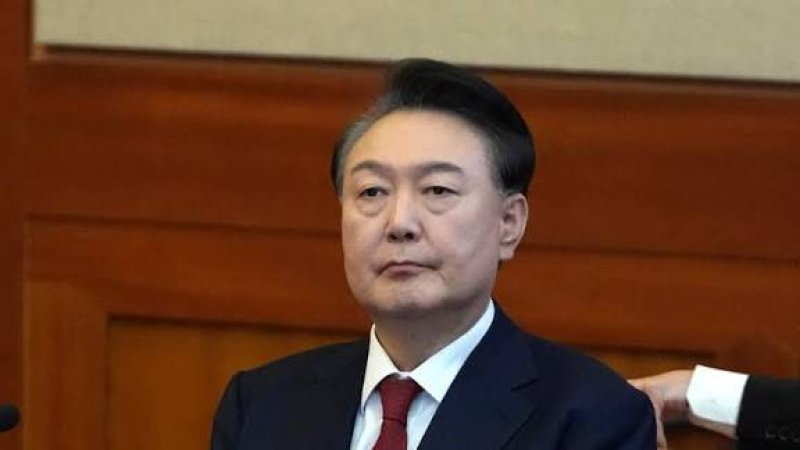
The verdict closes a chapter of one of South Korea’s biggest political crises, a saga that has been full of dramatic twists that have tested the country’s democratic guardrails.
On December 3, 2024, Yoon declared martial law in a late-night televised speech, saying there were “anti-state forces” within opposition parties that were sympathetic to North Korea.
Armed soldiers descended on the parliament by helicopter and attempted to storm the chamber where lawmakers were gathered. Shocked and angry citizens, along with lawmakers and parliament staff, rushed to barricade the entrances and fought to block the soldiers from reaching the chamber, in chaotic scenes broadcast live on television.
Yoon’s shocking declaration revived dark memories of the country’s authoritarian past, plunged South Korea into a constitutional crisis and was widely condemned as striking at the heart of the nation’s democracy. He reversed course within six hours, after lawmakers forced their way into parliament and voted unanimously to block it.
Since the late 1980s, South Korea has transformed into a robust democracy, with regular protests, free speech, fair elections and peaceful transfers of power. The country has also since grown into a major player in the global economy and remains a crucial US ally in Asia.
But its domestic political scene remains deeply polarized and fractious, with presidents on both sides of the political divide often facing calls for impeachment, criminal investigations and prosecution.