US and Iranian officials are set to meet in Swizerland on Tuesday for a second round of talks. Iran says the meeting will focus on its nuclear programme and the potential lifting of economic sanctions imposed by the US. Washington has previously indicated it wants to discuss other issues as well.
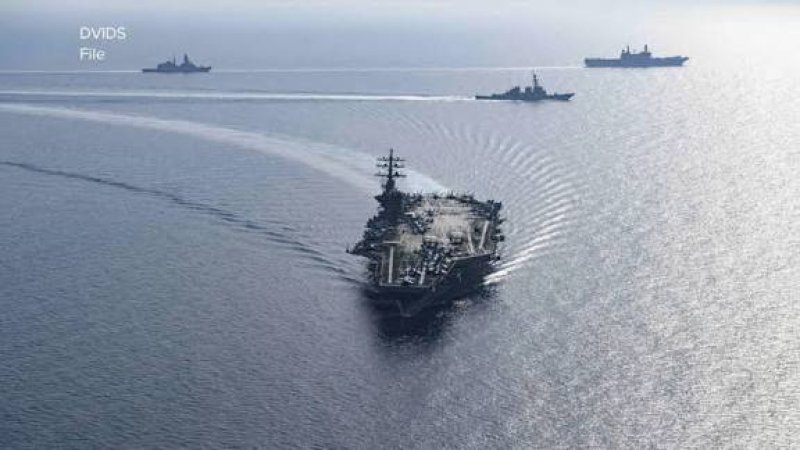
The Abraham Lincoln, which leads a strike group with three guided missile destroyers, carries 90 aircraft including F35 fighters, and 5,680 crew, was reportedly deployed to the Gulf region in late January but has not been seen in satellite imagery until now. It has been located off the coast of Oman, around 700km from Iran.
The US has also reportedly sent the USS Gerald R Ford, the world's largest warship, to the Middle East, which could arrive in the region within the next three weeks.
The Abraham Lincoln's arrival adds to what we know about the current US military build-up in the Middle East over the past few weeks, where BBC Verify has tracked an increase of US destroyers, combat ships and fighter jets in the region.
Publicly available images from the European Sentinel-2 satellites show Abraham Lincoln in the Arabian Sea around 150 miles (240km) off the coast of Oman.
It had not been seen since it reportedly entered the region in January but it had been crossing the open sea where satellite coverage is limited. Military assets on land are more visible and frequently captured on satellite.
It means we have now tracked 12 US ships in the Middle East through satellite imagery: the Abraham Lincoln, a nuclear-powered Nimitz-class carrier, which together with three Arleigh Burke class destroyers forms a carrier strike group; plus two destroyers capable of carrying out long-range missile strikes and three specialist ships for combat near to the shore that are currently positioned at Bahrain naval station in the Gulf. Two other destroyers have been seen in the eastern Mediterranean near the Souda Bay US base, and one more in the Red Sea.