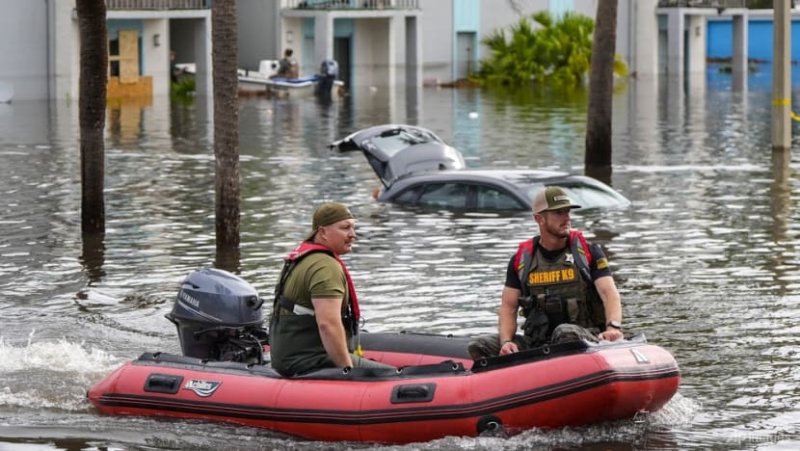
Hurricane Milton plowed into the Atlantic Ocean on Thursday after cutting a destructive path across Florida that spawned tornados, killed at least 10 people and left millions without power, but the storm did not trigger the catastrophic surge of seawater that was feared.
Governor Ron DeSantis said the state had avoided the "worst-case scenario," though he cautioned the damage was still significant. The Tampa Bay area appeared to sidestep the storm surge that had prompted the most dire warnings.
US Homeland Security Secretary Alejandro Mayorkas said at a White House briefing the government had reports of at least 10 deaths from Milton, adding it appeared they were caused by tornados.
In St. Lucie County on Florida's east coast, a spate of tornados killed five people, including at least two in the senior-living Spanish Lakes Communities, county spokesperson Erick Gill said. Search-and-rescue teams there are combing through hard-hit areas, including a mobile-home park.
There were 19 confirmed tornados in Florida as of 8 pm Wednesday, about the time Milton made landfall, DeSantis said. Some 45 tornados were reported throughout the day, mostly in the central and eastern parts of the state, the National Weather Service said.
More than 3 million homes and businesses in Florida were without power on Thursday morning, according to PowerOutage.us. At least some had already been waiting days for power to be restored after Hurricane Helene hit the area two weeks ago.
Milton shredded the fabric roof of Tropicana Field, the stadium of the Tampa Bay Rays baseball team in St. Petersburg, but there were no reported injuries. The ballpark was a staging area for responders, with thousands of cots set up on the field.
In the Tampa area, the storm toppled trees, threw debris across roadways and downed power lines, video footage from local news showed. Some neighborhoods were flooded, but the extent of the damage will not be known until crews can assess the destruction, Tampa Mayor Jane Castor said at a morning news conference.