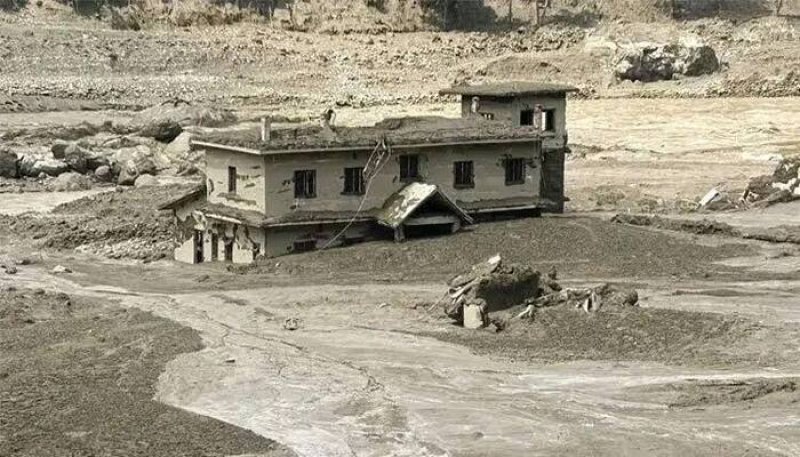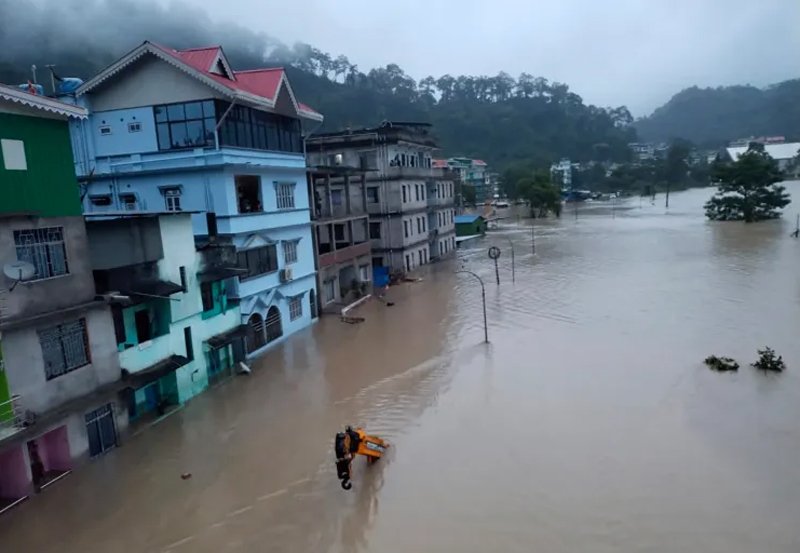
At least 10 people have been killed in India’s state of Sikkim and 82 others, including 23 army personnel, are missing after heavy rainfall caused the glacial Lhonak Lake to overflow, spurring catastrophic flooding in the region.
The northeastern state received 40.9mm (1.6 inches) of rainfall between Tuesday and Wednesday morning, according to the India Meteorological Department (IMD) – about five times its normal rate of 8.6mm (0.3 inches) for this time of the year.
“So far, 10 bodies have been recovered from different locations. At least 82 more are missing and 22 people are injured, some of them seriously,” Sikkim’s Chief Secretary V B Pathak told Reuters news agency.
A cloudburst – or an extreme amount of rain over a brief period of time – over Lhonak Lake triggered torrential flooding in the valley located about 150km (93 miles) north of Gangtok near the border with China.
“Intense rain has led to this catastrophic situation in Sikkim where the rain has triggered a glacial lake outburst flood and damaged a dam and caused loss of life and caused further damage to roads and infrastructure,” said Miriam Jackson, a senior cryosphere specialist at the Nepal-based International Centre for Integrated Mountain Development.

The lake, which sits at the base of a glacier in peaks surrounding the world’s third-highest mountain, Kangchenjunga, had shrunk by nearly two-thirds in size overnight, an area roughly equivalent to 150 football pitches (105 hectares), satellite photographs released by the Indian Space Research Organisation showed.
Heavy rainfall hampered the search for the Indian troops reported missing, with the capital city of Gangtok cut off by road, defence officials said.

“Twenty-three personnel have been reported missing and some vehicles are reported submerged under the slush. Search operations are under way,” a defence ministry spokesperson said.
India’s weather department has warned of landslides and disruption to flights as heavy rain is predicted to continue over the next two days in some parts of Sikkim.
Jackson warned that such extreme events have become more frequent “as the climate continues to warm and takes us into unknown territory”.
The main highway linking Sikkim to West Bengal state had collapsed and Gangtok was totally cut off by road, according to army spokesperson Anjan Basumatary.
About 15,000 people living in the vicinity are likely to be affected and at least eight major bridges have been washed away along the banks of the Teesta River, officials said.