An ancient supervolcano in the United States may be hiding the largest deposit of lithium found anywhere in the world.
A new study hypothesizes that the McDermitt Caldera, which sits on the border between Nevada and Oregon, contains more than double the concentration of lithium seen in any other bed of clay globally, around 20 to 40 million metric tons in total.
It's worth noting that the study was funded by a mining company, and current plans to mine the soft, silvery metal are steeped in controversy.
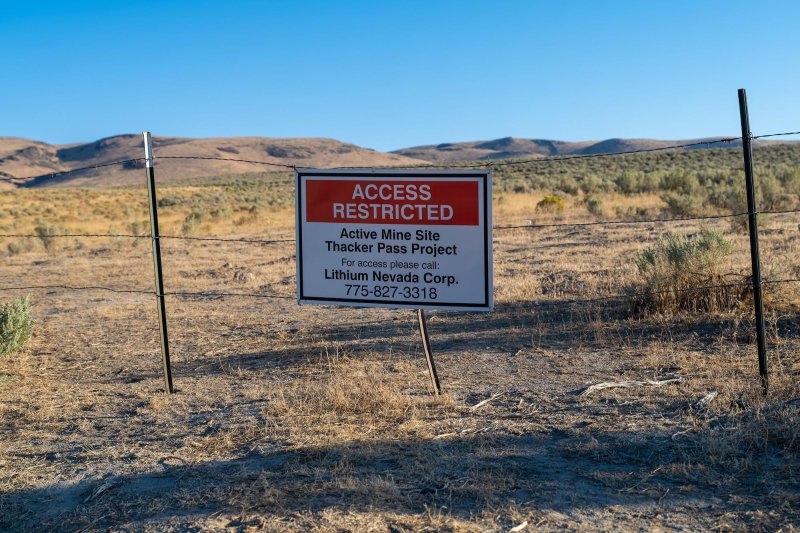
Many scientists, environmentalists, ranchers, and First Nations people are concerned by the US government's recent decision to approve the Thacker Pass Lithium mine in the McDermitt Caldera, which sits on land that is sacred to several Indigenous tribes and contains precious wildlife habitats.
Today, lithium is like liquid gold for car manufacturers. It's used to build the batteries in electric vehicles, and to meet rapidly rising demand, an estimated million metric tons of it will be needed by 2040.
Transitioning away from fossil fuels is of the utmost necessity, but this particular climate solution is hardly perfect.
In fact, the global rush to unearth more lithium could have some serious adverse impacts on nature and people. Lithium operations can destroy ecosystems, deplete groundwater, and produce masses of waste. During battery manufacturing, fossil fuels are also burned.
At the moment, the US is largely reliant on China for its lithium, so there's been a recent push to mine more on federal lands. If all goes ahead, the Thacker Pass Lithium mine will be the second large-scale mine of its kind in the nation.
The project is owned by Lithium Nevada, LLC, a subsidiary of Lithium Americas Corporation (LAC), which funded the recent research.
According to the company's latest review, the caldera's southernmost rim, including Thacker Pass, contains the highest concentrations of lithium in the region
When the ancient supervolcano erupted around 16 million years ago, hot liquid magma gushed through the ground's cracks and fissures and enriched the clay soil with lithium, according to experts from Lithium Nevada, the University of Oregon, and the New Zealand research institute GNS Science.