Saudi Arabia's ancient Red Sea port city Jeddah, stewing in the steamy heat of the world’s hottest summer on record, is not the obvious pick to cool the world’s fiercest conflict, currently raging in Ukraine.
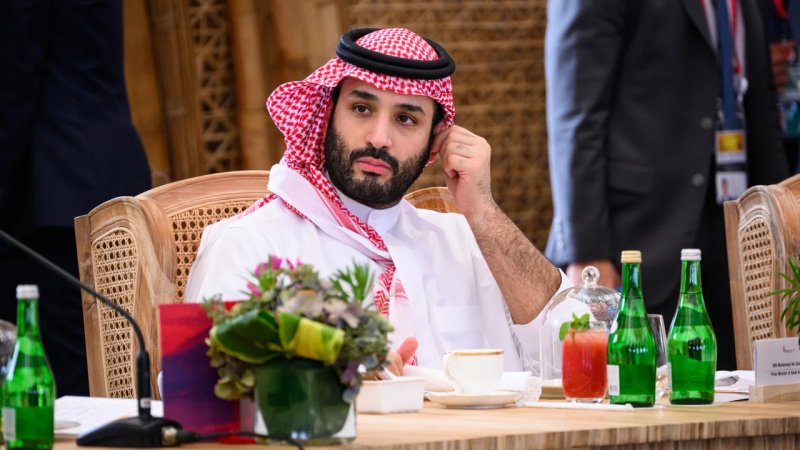
Yet, the desert kingdom’s king-in-waiting, Crown Prince Mohammed bin Salman – MBS for short – thinks he can help. Last fall he had a role in the release of Western foreign fighters captured by Russian forces while fighting in Ukraine. Now he is hosting a summit to discuss peace in the country.
Ukrainian officials say the venue is a boon for them “that completely destroys the narrative of Russia” that Ukraine is only supported by “countries of the collective West.” They expect as many as 40 nations to be represented, including the US and India.
In the days ahead of the summit, the Ukrainians set out their intent. “Our goal in Saudi Arabia is to develop a unified vision of the formula and to work out the possibilities of holding the future Global peace, Summit.” they said, referring to Ukraine’s peace plan.
That Moscow will only “monitor” and not attend risks the summit becoming a desert snowflake, momentarily awesome and inspiring, but blink and it’s gone.
Even so Ukrainian officials are pinning their hopes on it, “to unite the world around Ukraine.” The White House is sending National Security Adviser Jake Sullivan.
US State Department officials are billing it as “Ukraine in the driver’s seat,” an opportunity to find a “potential diplomatic resolution to the war” and for nations who might otherwise not hear directly from Kyiv to talk face-to-face with Ukrainian officials.
The first session of this series was quietly hosted by the Danes in June, and gathered 15 nations, many from the global south whom to varying degrees are sympathetic to Putin’s argument the war was “necessary,” that NATO forced him to invade Ukraine.
That summit produced no major headlines, nor a discernable drift to Ukraine’s prerequisite for peace that Russian troops exit Ukraine. So, what is different this time?
For one, Saudi Arabia, unlike Denmark, has not overtly taken a side in the war. More significantly MBS has leverage. Like the roads that led to Rome in its day, Saudi Arabia is increasingly at the confluence of competing global interests.
President Biden came in July last year, China's President Xi Visited a few months later. Both had business with MBS.
Biden was able to build on their shared diplomatic achievement, a peace deal in Yemen a few months earlier. Xi talked business, and signed memorandums of understanding worth billions of dollars, but unbeknownst to most they were only a few months away from a seismic diplomatic breakthrough.
In spring this year, Saudi Arabia and China announced a confidence-building peace plan with Iran to repair their hostile relationship. So far it has worked. Iran’s proxies in Yemen, the Houthis, have stopped attacking Saudi with Iranian-made ballistic missiles.
The two nations have reopened diplomatic missions in their respective capitals and come fall will likely extend their newfound cooperation into commerce.
What MBS wants most is a stable oil market and stronger trade relations throughout the Gulf. Disagreements in the region alone are dangerous. The war – between oil-rich, nuclear-armed Russia and Ukraine – could be catastrophic. CNN