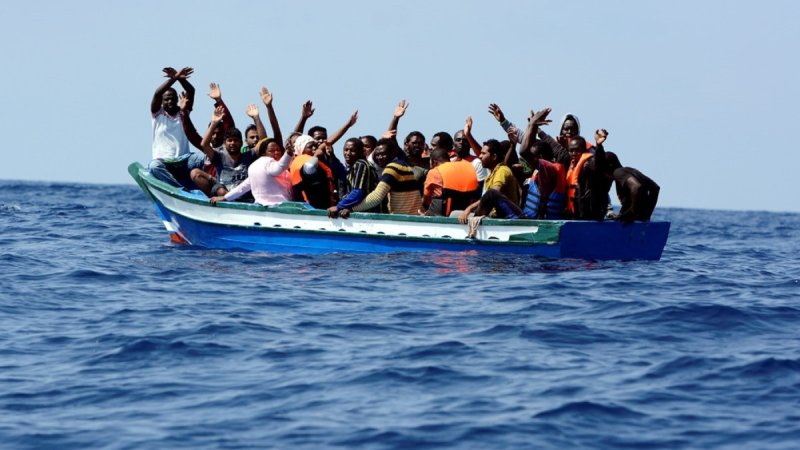
At least 34 people have died after a boat carrying migrants sank off the coast of Senegal, the Senegalese Press Agency (APS) reports, citing an official source.
The interior ministry said one person had been rescued, but the number of people still missing was yet to be established. BBC reported.
The small wooden boat capsized between the capital, Dakar and the northern city of Saint-Louis, as it headed towards Spain's Canary Islands.
Spanish migrant rights group Walking Borders recorded 635 deaths on the Atlantic route to the Canary Islands between January and May 2026, the highest toll among the routes it monitors.
Saliou Diouf, founder of Senegalese migrant aid group Boza Fii, told AFP that all the bodies recovered so far were Senegalese. The nationalities of other people on board was yet to be established, as search operations continued.
President Bassirou Diomaye Faye has expressed his condolences to the victims' families and urged Senegalese nationals not risk their lives on the dangerous sea crossings.
In a statement posted on X, he pledged to intensify efforts to dismantle the networks organising the journeys.
"We will relentlessly continue the fight against those who organise these crossings and the work that gives our young people reasons to hope here," he said.
The tragedy comes amid renewed concerns over the dangers facing migrant attempting to reach Europe by sea.
Walking Borders estimates that about 21 people died for every 100 who reached the Canary Islands during the period it monitored.
Senegalese authorities said they had intercepted another boat, on Friday, carrying 142 migrants attempting to reach Spain.
Those on board included 23 women, two babies and two other children. Police said the group comprised nationals of Senegal, Gambia, Guinea-Bissau, Guinea and Nigeria.
Meanwhile, a state of emergency was declared on the Spanish island of El Hierro on Saturday following a surge in migrant arrivals.
More than 3,300 people have reached the island in about 30 boats since the beginning of November, according to local authorities.
This amounts to almost a third of the population on the island, one of the main entry points into Europe for migrants arriving from West Africa.