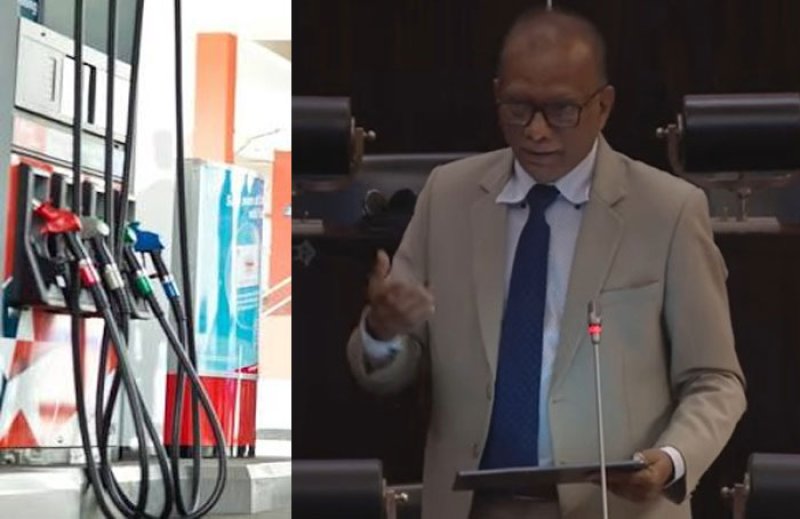
Energy Minister Anura Karunathilaka has outlined the criteria used by the Ceylon Petroleum Corporation (CPC) when considering applications for new fuel filling stations.
Speaking on the approval process, the Minister said several factors are assessed before location approval is granted, including the accessibility of the proposed site, expected sales volume, local demand and population density.
The Ministry also evaluates the competitive environment within the proposed station’s catchment area, as well as the physical suitability of the land. In addition, the applicant’s financial capacity and business ability to operate and maintain the station are considered before a licence is approved.
Addressing questions about the legal and structural basis for fuel dealer commissions, Karunathilaka said dealer margins are determined by the respective petroleum companies.
He explained that the CPC operates its fuel distribution network through two main categories of filling stations: Dealer-Owned, Dealer-Operated (DODO) stations and Company-Owned, Dealer-Operated (CODO) stations.
For privately owned DODO stations, the dealer margin is influenced significantly by the station’s distance from other existing fuel stations. Regulatory considerations apply based on distances such as 5, 10 and 15 kilometres.
The Minister further noted that commission rates may vary during the first five years following the establishment of a new station.
According to the Minister, the final dealer commission is calculated using a prescribed formula that takes into account geographical factors, including the proximity of other filling stations, as well as the bulk volume of fuel supplied to the particular station.