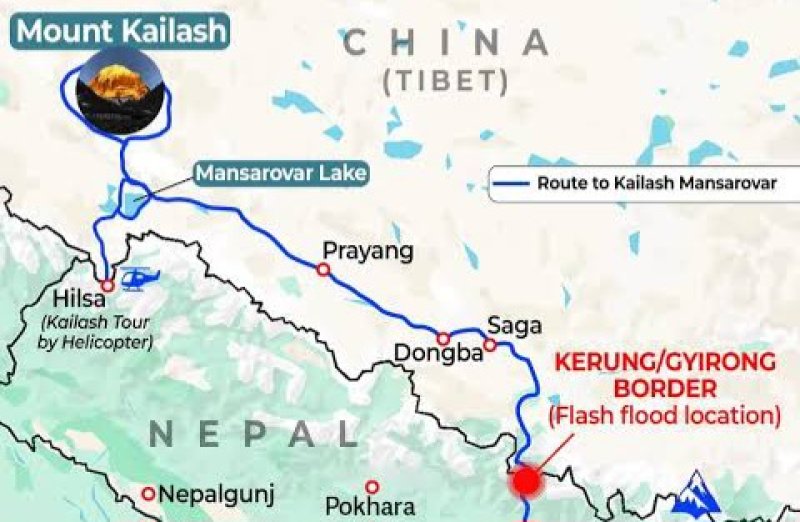
A new report says the glacier that collapsed, triggering the devastating floods, showed visible signs of instability days before the disaster, including brown meltwater and cracks in the surrounding bedrock.
Glacier risk: Meanwhile, glaciers surrounding an impact crater in Nepal “may still collapse, posing significant potential risks,” according to Chinese state broadcaster CCTV, citing China’s Ministry of Water Resources.
On the ground: Authorities are burying hundreds of unidentified victims in a mass grave, reports CNN’s team in Nepal who also spoke to the man with the Herculean task of reuniting families with the bodies of their missing loved ones.
Chinese and Nepali officials met in Kathmandu in late May to discuss sharing data and monitoring natural risks along their Himalayan border – just months ahead of the deadly landslide and flooding that devastated parts of both countries.
The two sides were yet to come to any specific agreement on data-sharing following the May meeting – which was first reported by Reuters – a Nepali government official told CNN. Instead, they had agreed to meet again later.
“The meeting was intended to create a situation for reaching an agreement to share real-time data (between the) two countries, especially in areas of early warning systems, glacial lake monitoring and joint research in mountain region,” Binod Parajuli, a senior hydrologist with Nepal’s Flood Forecasting Section, told CNN.