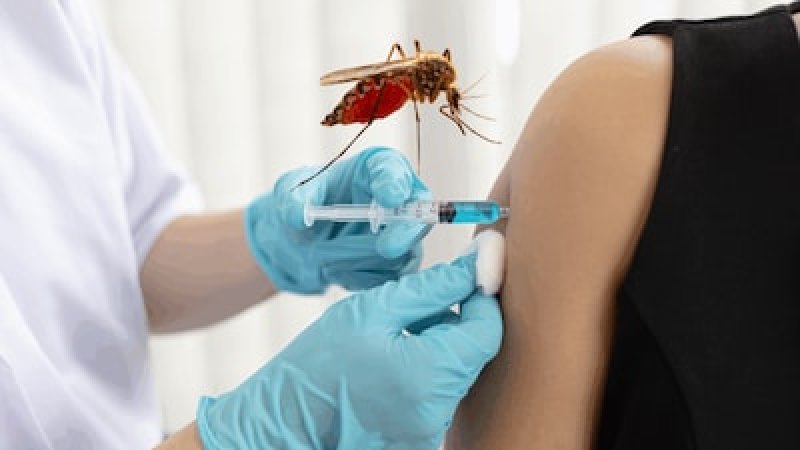

India has taken a major step in the fight against dengue after the Central Drugs Standard Control Organisation (CDSCO) approved Takeda's QDENGA (TAK-003), making it the country's first approved dengue vaccine.
The approval comes as India continues to shoulder one of the world's highest dengue burdens, with cases increasing sharply over the past two decades due to urbanisation, climate change, changing mosquito habitats and population growth. NDTV reported.
QDENGA is a live-attenuated tetravalent vaccine, meaning it is designed to protect against all four dengue virus serotypes (DENV-1, DENV-2, DENV-3 and DENV-4). Unlike the older dengue vaccine Dengvaxia, QDENGA does not require people to undergo blood testing to determine whether they have previously had dengue, a significant advantage for large-scale public health programmes.
The vaccine has already been approved in more than 40 countries, including the European Union, the United Kingdom, Brazil, Indonesia and Argentina. India now joins that list at a time when dengue is emerging as one of the country's biggest seasonal public health threats.
Here's everything you need to know about India's first dengue vaccine, including how it works, who can receive it, how effective it is, what it may cost and when it could become available.