Zira Daily Political Desk
The prospect of a political reunion between the United National Party (UNP) and the Samagi Jana Balawegaya (SJB)—once considered highly unlikely—has emerged as one of the most closely watched developments in Sri Lankan politics.
As both parties grapple with a rapidly changing political landscape, discussions on forging a united opposition appear to be gaining momentum, although significant differences continue to stand in the way of a formal alliance.
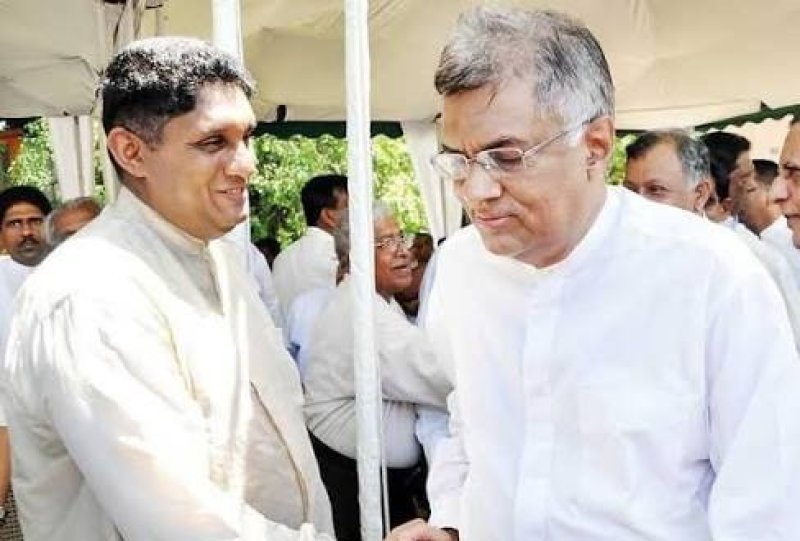
Recent discussions between UNP leader Ranil Wickremesinghe and SJB leader Sajith Premadasa have fuelled speculation that the two parties are seriously exploring the possibility of working together ahead of future elections. While neither side has publicly confirmed a final agreement, political insiders indicate that negotiations have progressed beyond preliminary exchanges into more structured discussions.
Committee proposal signals progress
One of the most notable developments is the reported agreement in principle to establish a special committee tasked with overseeing the process of building a partnership between the two parties.
The proposal represents a marked shift from previous attempts at reconciliation. Earlier efforts by the UNP to initiate formal discussions through appointed committees reportedly failed to gain traction, with the SJB declining to engage with several such initiatives. The willingness of both parties to now consider a joint mechanism suggests a greater level of political pragmatism than in previous years.
However, the composition and leadership of the proposed committee have already become points of contention.
According to political sources, the SJB has insisted that party leader Sajith Premadasa should serve as the committee's chairperson. The UNP, while not rejecting the proposal outright, has reportedly countered by requesting that if the chairmanship is allocated to the SJB, the position of committee secretary should be reserved for the UNP.
Another issue under discussion is the committee's organisational structure. The UNP has reportedly proposed that no treasurer's position be created, although the reasoning behind this request has not been officially explained. The SJB is yet to formally respond to these conditions.
More than a Two-Party Alliance
Beyond procedural matters, broader political strategy continues to divide the two camps.
Ranil Wickremesinghe is believed to favour the creation of a wider opposition coalition rather than limiting discussions to a bilateral UNP-SJB arrangement. His vision reportedly includes engaging political groups associated with the Joint Opposition as well as several independent political figures.
There are also indications that Wickremesinghe is interested in attracting a younger generation of political leaders, including parliamentarians currently aligned with the Sri Lanka Podujana Peramuna (SLPP).
Such an approach would significantly expand the alliance's electoral reach but also introduces fresh political complications.
SJB draws the line
For the SJB, the inclusion of SLPP-aligned politicians remains one of the most sensitive issues in the negotiations.
Party insiders suggest there is considerable resistance within the SJB to any arrangement involving members associated with the SLPP or the Joint Opposition. Years of political rivalry and ideological differences have created deep mistrust between the respective leaderships, making any broader coalition difficult to accept.
Despite these reservations, it was reported that the UNP has already initiated preliminary discussions with several opposition groups and is considering a series of public rallies in the coming months aimed at demonstrating opposition unity.
Whether such efforts can bridge long-standing political divisions remains uncertain.
The negotiations also reflect a delicate balancing act for both parties.
For the SJB, maintaining Sajith Premadasa's leadership position appears to be central to any agreement. For the UNP, protecting the party's institutional identity while participating in a larger alliance remains equally important.
Neither side appears willing to concede too much too early, suggesting that negotiations are likely to continue for some time before any formal announcement is made.
Political observers said that while both parties recognise the potential electoral advantages of unity, questions surrounding leadership, decision-making authority, committee structures and coalition partners remain unresolved.
Although optimism has grown over the possibility of an opposition alliance, political analysts caution that discussions remain at an early stage.
The proposed committee has yet to be finalised, disagreements persist over leadership positions, and the broader question of whether the alliance should extend beyond the UNP and SJB continues to divide negotiators.
For now, both parties appear to be testing polit