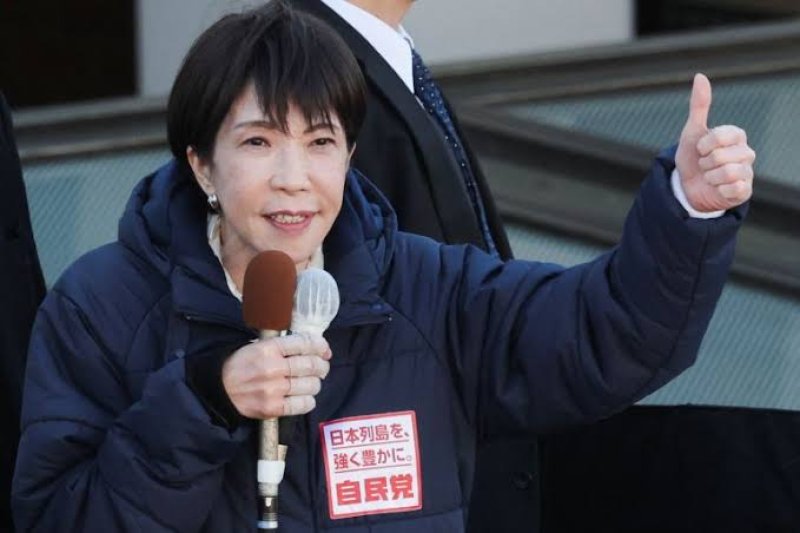
Voting has ended in Japan's snap election called by Prime Minister Sanae Takaichi.
Exit polls in Japanese media predict a win for the country's first female prime minister. She is seeking a clear public mandate just four months after becoming leader of the Liberal Democrat Party (LDP).
Her predicted success is in marked contrast to her two predecessors, under whom the party lost its parliamentary majority because of corruption scandals and rising costs.
An LDP-led coalition has governed Japan for much of its post-war history due to the lack of a strong opposition.
Some called the move a gamble after the LDP lost its majority in both houses of parliament, and its decades-old coalition with the Komeito party had collapsed.
But her personal popularity appears to have helped the party, with approval ratings for her government mostly hovering above 70%. And the polls have given the LDP's current coalition with the Japanese Innovation Party up to 300 of the 465 seats in the lower house.
"People want their lives to be better and more comfortable because we are so accustomed to not having inflation [costs rising]... so people are very worried. I think we need a long-term solution rather than short-term fixes," Ritsuko Ninomiya, a voter in Tokyo told the BBC.
Japanese voters have been frustrated with the recent political scandals in the LDP, especially as costs soared.
"Housing is very expensive," says Rumi Hayama. "Our son is getting bigger and we need a bigger place but it is not affordable although we have decent jobs. Prices are getting higher and [it is] getting hard to live in Japan. It was not like this before."