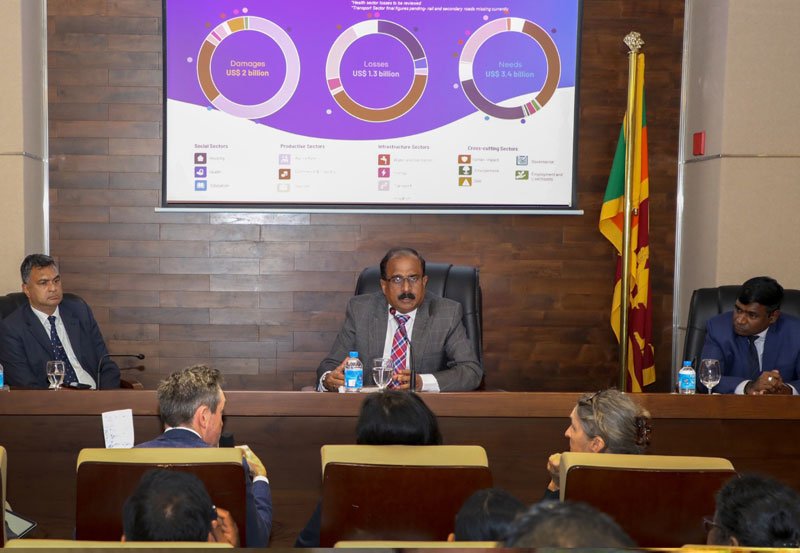
Deputy Minister of Defence, Major General Aruna Jayasekara (Retd), chaired a meeting on the Post Disaster Needs Assessment (PDNA) at the Ministry of Defence, with the participation of senior officials representing key stakeholder institutions.
The PDNA process is being carried out by the Disaster Management Centre (DMC) in collaboration with the Department of National Planning (NPD) and other national and international development partners. The assessment involves the systematic collection, analysis and evaluation of data on physical damage, economic losses and social impacts across affected sectors, in line with an agreed timeline.
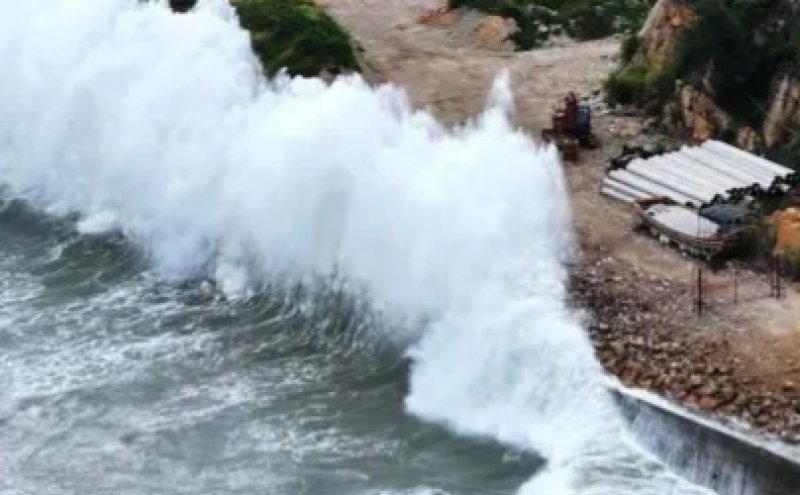
The meeting was convened to raise awareness and to present preliminary PDNA findings on the impact of Cyclone Ditwah, which caused extensive damage to lives, livelihoods, infrastructure and essential services in several parts of the country. Following the completion of immediate relief efforts, the PDNA process has been initiated to support the transition towards recovery, rehabilitation and long-term rebuilding.
Addressing the gathering, the Deputy Minister stated that the PDNA is being conducted to develop a robust recovery framework aligned with the Presidential Task Force on the ‘Rebuilding Sri Lanka’ programme. He noted that the Task Force consists of eight subcommittees, with the PDNA committee functioning as the primary body overseeing the others under his chairmanship.
The committee engaged in detailed discussions on the way forward to achieve the agreed targets within the designated timeframe. Key agenda items included preliminary estimates of damages and losses, assessment of recovery needs, support expected from development partners, and potential coordination challenges.
The meeting concluded with a call for sustained inter-agency cooperation to strengthen the PDNA process and enable the formulation of a risk-informed, resilient and sustainable recovery plan for the country.
The meeting was attended by the Defence Secretary, the Director General of the Disaster Management Centre, the UN Resident Coordinator in Sri Lanka, representatives from the European Union, World Bank, Asian Development Bank, United Nations Development Programme, Asian Disaster Preparedness Center, the Department of National Planning, and senior officials from relevant line ministries.