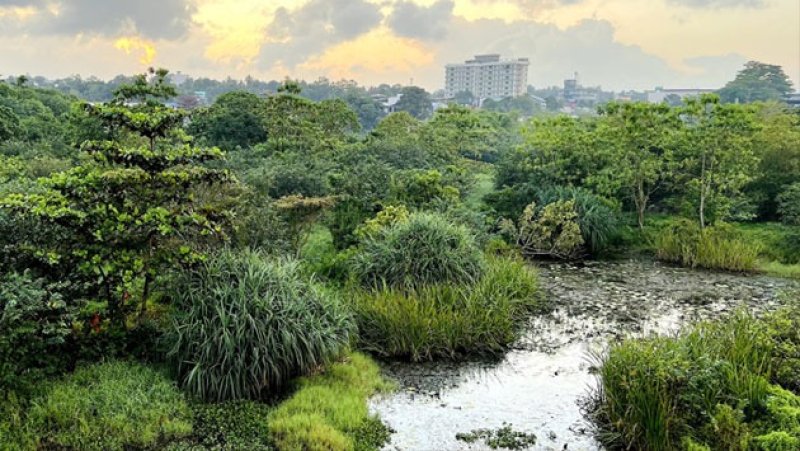
Despite official commitments to protect Sri Lanka’s wetlands, ongoing development projects continue to cause widespread destruction, rendering conservation efforts ineffective, the Centre for Environmental Justice (CEJ) has warned.
Issuing a statement to mark World Wetlands Day, observed on February 2, the CEJ said policy declarations and awareness campaigns would have little impact unless development planning places genuine priority on safeguarding wetlands.
World Wetlands Day commemorates the adoption of the Ramsar Convention on Wetlands in Iran in 1971. This year’s theme, “Wetlands and Traditional Knowledge: Celebrating Cultural Heritage,” underscores the close relationship between wetlands and the cultural practices, livelihoods and traditional knowledge of communities around the world.
The CEJ noted that wetlands — including lakes, rivers, swamps, mangroves, coral reefs, rice fields and tidal flats — occupy only about six percent of the Earth’s land surface but support nearly 40 percent of global plant and animal species. These ecosystems play a vital role in flood mitigation, water purification, climate regulation, food security, tourism and employment, with more than one billion people worldwide directly dependent on them.