In a move set to elevate the nation’s drone industry, the Civil Aviation Authority of Sri Lanka (CAASL) is introducing a formal licensing system for operators of Unmanned Aircraft Systems (UAS) engaged in commercial and professional activities.
Guided by Capt. Daminda Rambukwella, Director General of Civil Aviation and Chief Executive Officer (DGCA & CEO), CAASL has already established standard drone regulations under IS-53. These regulations now provide the foundation for a structured UAS pilot licensing framework.
Under the new system, aspiring UAS pilots must pass a comprehensive evaluation, including a theory examination, practical assessment, and a live demonstration of operational skills. Additional requirements include a medical check-up and security clearance, ensuring safety and professionalism within the industry.
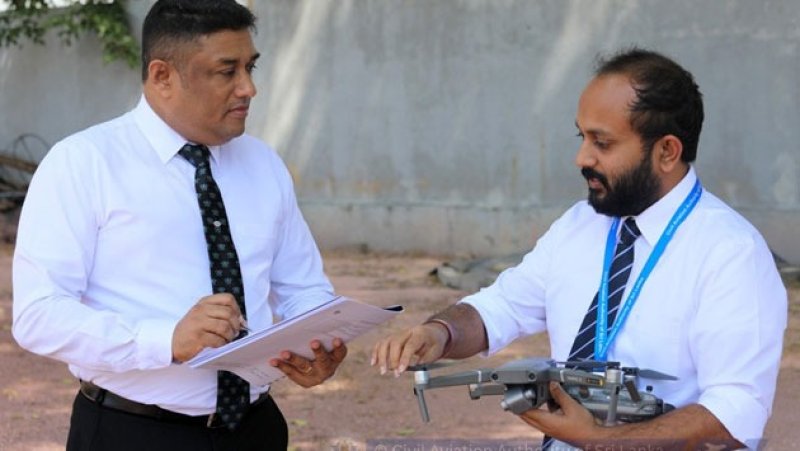
The first pilot licensing assessment was personally overseen by Capt. Rambukwella, with Civil Aviation Inspector Mr. Praveen Wijesinghe successfully completing both the theoretical and practical components at CAASL.
Currently, all drones operated for commercial purposes must be registered with CAASL, which continues to supervise both manned and unmanned aircraft operations nationwide. By implementing this licensing system, CAASL aims to cultivate a professional and safety-conscious operational culture in Sri Lanka’s emerging drone sector.
Sri Lanka will now join India as one of only two South Asian countries to establish an official UAS pilot licensing framework. Experts anticipate that this initiative will spur economic growth by enabling the safe integration of drone technology across industries such as agriculture, logistics, infrastructure, and more.
With drone applications expanding globally, CAASL’s proactive regulatory approach positions Sri Lanka as a forward-thinking leader in South Asia’s aviation landscape.