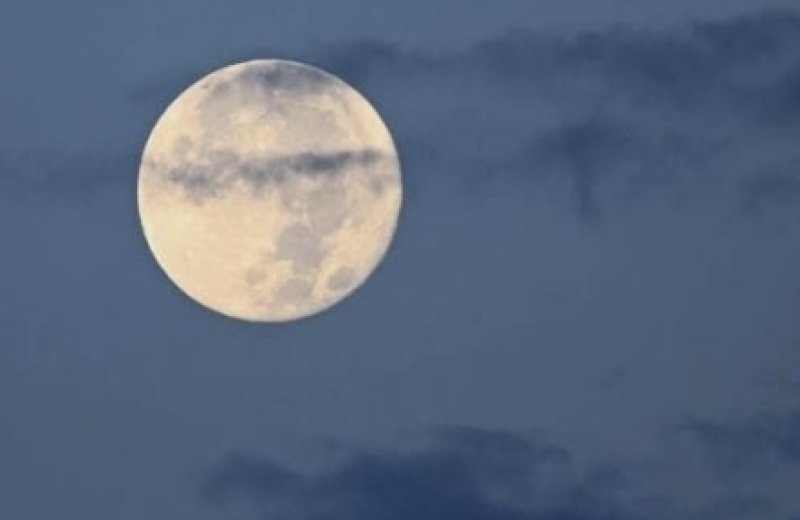
The full moon visible today is a supermoon — appearing significantly larger and brighter than an ordinary full moon.
According to the Arthur C. Clarke Institute for Modern Technologies, this supermoon is about 14% larger and shines nearly 30% brighter than usual, as the moon moves closer to the Earth in its elliptical orbit.
On this day, the moon comes as close as approximately 356,980 kilometres to Earth, making it the largest supermoon event of the year. Experts note that while supermoons typically occur during full moon phases, they can also happen during new moons.
Higher sea tides are also expected due to the moon’s increased gravitational pull.