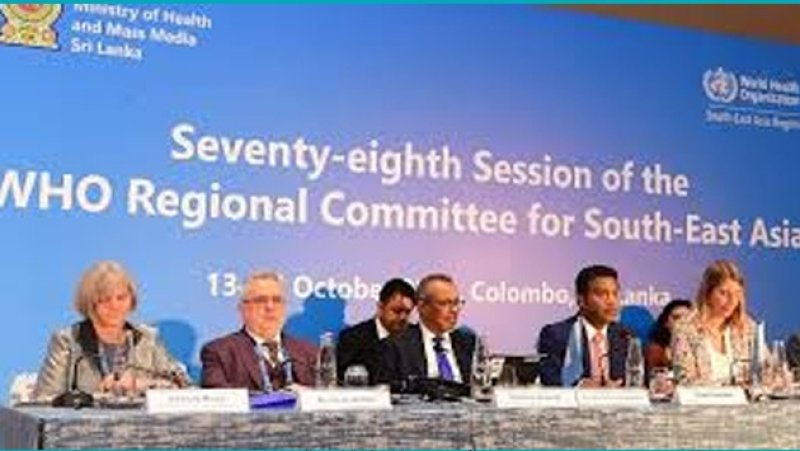
The 78th Session of the WHO Regional Committee for South and Southeast Asia concluded successfully in Colombo, marking a major milestone in advancing the region’s health agenda. Sri Lanka was commended for its excellent organization and warm hospitality as the official host of the conference.
The session, which focused on healthy aging and combating smokeless tobacco, also addressed several other key issues, including expanding the Health Emergency Fund (SEARHEF), accelerating action against antimicrobial resistance, and aligning regional policy actions with global health commitments. Delegates reviewed progress on previous resolutions and adopted new ones targeting priority health concerns such as the regulation of electronic cigarettes, nicotine pouches, and vaping.
The conference was attended by WHO Director-General Dr. Tedros Adhanom Ghebreyesus, WHO South-East Asia Regional Director Dr. Katharina Boehme, Health Ministers from eight member countries, ambassadors, and numerous WHO experts. Participants expressed their appreciation to Sri Lanka for its efficient hosting and to the conference chair, Minister of Health and Mass Media Dr. Nalinda Jayatissa, for his effective leadership.
Delivering the closing remarks, Minister Jayatissa said it was a great honour for Sri Lanka to host the session and thanked all member states and WHO leaders for their trust and cooperation. He also extended special appreciation to the Vice-Chairs—Maldives Health Minister Abdulla Naseem Ibrahim and Bhutan Health Minister Tandin Wangchuck—for their exemplary support.
Minister Jayatissa emphasized the need to reorient primary health services to ensure universal access to quality care, highlighting the growing importance of elder care amid shifting demographic and disease trends.
The final day of the conference began with a special yoga session attended by regional health ministers and experts. The day’s proceedings featured presentations on the “Progress Reports on Selected Regional Committee Resolutions” and joint statements on initiatives such as the Drugs for Neglected Diseases Initiative and the acceleration of cardiovascular disease prevention and control in the Asian region.
Health ministers and experts also shared their national experiences, reaffirming regional solidarity and commitment to achieving the WHO’s vision of “Health for All.”