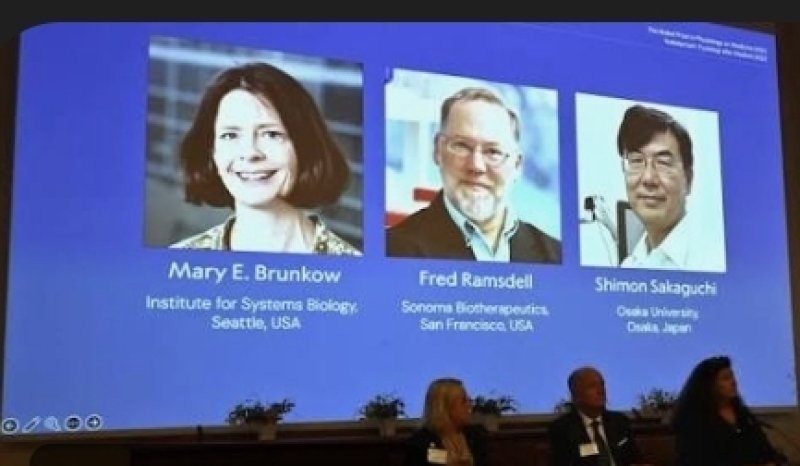
The 2025 Nobel Prize in Physiology or Medicine has been awarded to three scientists — Americans Mary E. Brunkow and Fred Ramsdell, and Japanese immunologist Shimon Sakaguchi — for their groundbreaking work on how the immune system defends the body from harmful microbes.
The Nobel Committee announced in Stockholm on Monday that the trio was honored “for their fundamental discoveries relating to peripheral immune tolerance.” Their research identified and explained the role of regulatory T cells, which act as the immune system’s safeguards by preventing immune cells from attacking the body’s own tissues.
“These discoveries have been decisive for our understanding of how the immune system functions and why we do not all develop serious autoimmune diseases,” said Olle Kämpe, chair of the Nobel Committee.
Sakaguchi first identified this class of T cells in 1995, reshaping scientific understanding of immune complexity. Brunkow and Ramsdell expanded on his work in the early 2000s by linking a gene mutation, Foxp3, to vulnerability to autoimmune diseases in mice. They later showed that mutations in the human equivalent of this gene cause IPEX, a severe autoimmune disorder.
In 2003, Sakaguchi connected their findings with his earlier discovery, demonstrating that the Foxp3 gene is crucial for the development of regulatory T cells.
The Nobel Committee noted that their collective work has paved the way for new therapies in cancer and autoimmune disease treatment, advancing the global understanding of immune regulation.